
SHUT UP ‘N PLAY YER BIKE
SHUT UP ‘N PLAY YER BIKE: Sebastiano De Gennaro e Vincenzo Vasi a BIKO
60 anni dopo la storia apparizione di Zappa in TV, una performance sonora fatta di sintetizzatori, campanelli e biciclette.
[Milano - 20 Marzo] Mercoledì 27 Marzo presso BIKO club di Milano, 19’40’’ presenta SHUT UP ‘N PLAY YER BIKE all’interno della programmazione di Puntuale Festival 2024. Sul palco Sebastiano De Gennaro e Vincenzo Vasi sono impegnati in una performance in omaggio della storica apparizione televisiva dove Frank Zappa ha suonato una bicicletta.
Data e Ora: 27 Marzo ore 21:30
Luogo: BIKO club, Via Ettore Ponti, 40, 20143 Milano MI
Biglietti: in vendita sulla piattaforma DICE o presso il ticket office a partire da 13,80€. Necessaria tessera ARCI
Era il 1963 quando Frank Zappa, uno dei geni musicali del XX secolo, giovanissimo, senza pizzetto e in giacca e cravatta si presenta in una puntata del famosissimo programma televisivo statunitense “The Steve Allen Show“ e sorprende il pubblico suonando una bicicletta. A 60 anni da questa storica apparizione TV di Zappa il 27 marzo Puntuale Festival ospita una performance sonora di Sebastiano De Gennaro e Vincenzo Vasi ispirata e dedicata a questo avvenimento. I due artisti suoneranno un ciclo sintetizzatori, campanelli polifonici, ruote e raggi sonori. La performance sarà preceduta dalla proiezione di un video documentario realizzato da 19’40” e dedicato alla storia delle biciclette sonore e dei loro inventori.
“In questa performance - spiega Sebastiano De Gennaro - con Vincenzo Vasi c’è una sana follia, facciamo un’arte povera ed esplosiva. Mettiamo le bici con le ruote per aria e cominciamo a suonarle. Ingenio, riciclo, socialità, movimento, spazio e suono, c’è tutto questo in Shut up ’n play yer bike”
Sebastiano De Gennaro è percussionista, rumorista, e compositore. Si diploma presso il Conservatorio Giuseppe Verdi di Milano in Percussioni con Maurizio Ben Omar. Nel 2016 fonda con Enrico Gabrielli e Francesco Fusaro la collana discografica 19’40’’. È percussionista e co-fondatore dell’ensemble Esecutori di Metallo su Carta. Ha all’attivo sette album come solista e vanta collaborazioni con artisti del calibro di Terry Riley, Sandro Mussida, Azio Corghi, Dario Buccino. De Gennaro compie un percorso di ricerca sonora anche in ambito ‘popular’ collaborando con Ludovico Einaudi, Daniele Silvestri, Baustelle, Vinicio Capossela, Francesco Bianconi e numerosi altri artisti.

Vincenzo Vasi è polistrumentista e compositore, è considerato uno degli artisti più eclettici nell’ambito di vari generi musicali, dalla sperimentazione elettronica sino al pop d’autore. Suona e intreccia diversi strumenti musicali: basso, theremin, vibrafono, percussioni, chitarra, ma anche ukulele, giocattoli, tastiere, flauto a tiro, kazoo e flauto da naso. Ha inciso oltre 150 album nei panni di Leader, co-leader, collaboratore e sound engineer ed è attivo sin dai primi anni 90 n incrociando il teatro, la rimusicazione di film muti, l’installazione sonora, la colonna sonora, la letteratura e la poesia, Vincenzo Vasi vanta innumerevoli collaborazioni come Guest in album di artisti tra i quali Malika Ayane, Cesare Cremonini, Biagio Antonacci, Eva Kant.
Puntuale Festival è una serie di appuntamenti di ascolto, musica e divulgazione a cura della crew di 19’40”. Ogni mese Puntuale Festival racconta musica scritta, sabotata, trascritta e raccontata con parole semplici a chiunque sia curioso di scoprire nuove modalità di approccio alla musica classica o contemporanea.
Riferimenti: www.19m40s.com www.bikoclub.net www.sebastianodegennaro.it
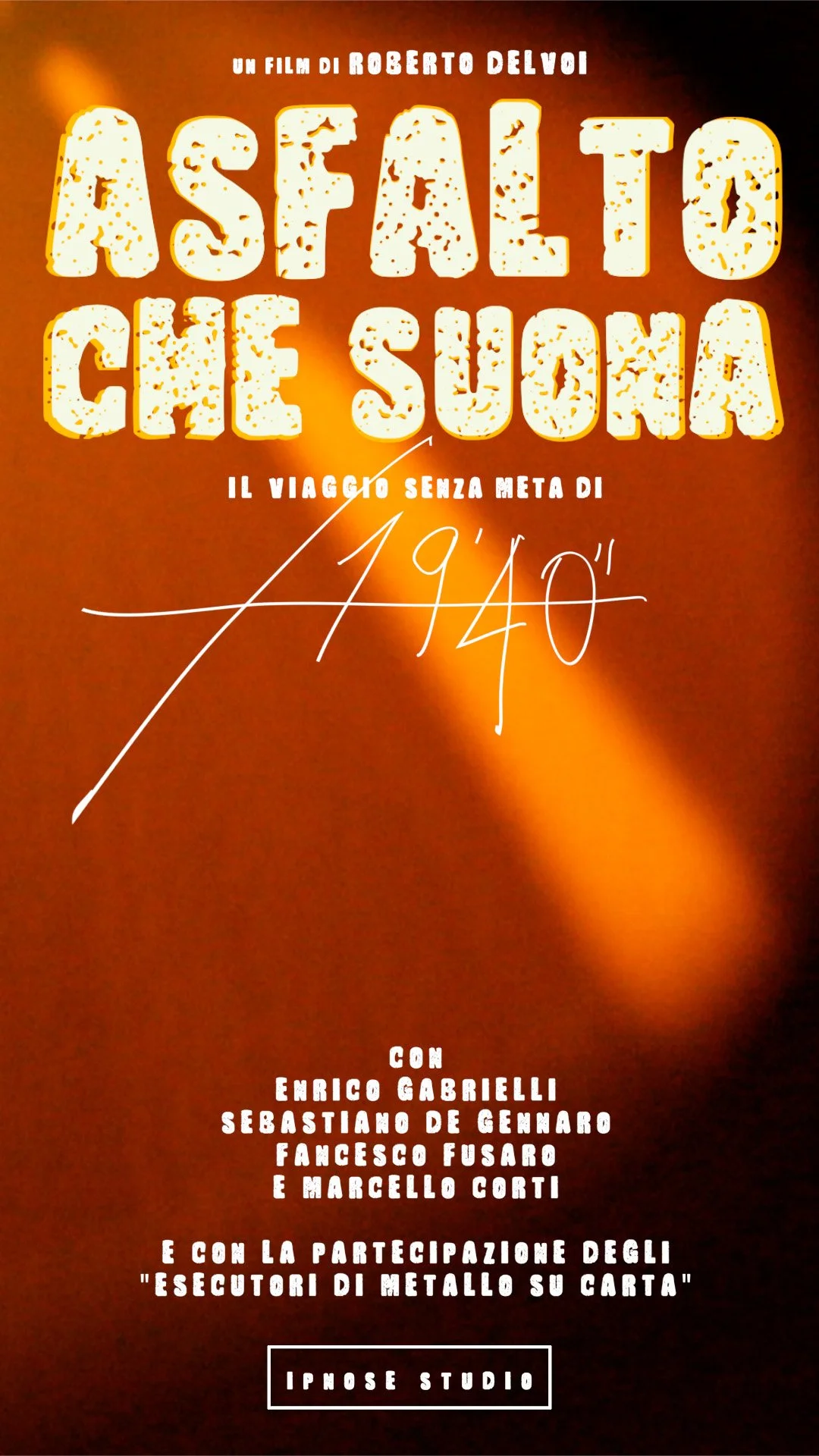
ASFALTO CHE SUONA, il trailer
Il trailer di ASFALTO CHE SUONA, il 29 Febbraio 2024 in prima visione assoluta al SEEYOUSOUND Festival. Ci vediamo e sentiamo lì!
Un film di Roberto Delvoi Un viaggio romanzesco viaggio attraverso l’audace e sperimentale mondo della collana di musica (anti)classica 19'40". I fondatori Enrico Gabrielli, Sebastiano De Gennaro e Francesco Fusaro, assieme al direttore d’orchestra Marcello Corti, raccontano il proprio lavoro in un documentario on the road, il quale unisce performance dal vivo, registrazioni in studio e viaggi rocamboleschi attraverso l'Italia. Passando dal fascino delle colonne sonore dei videogiochi alla ricercatezza della notazione grafica, dalla poesia della chanson francese fino a giungere all'eleganza della musica classica, Asfalto Che Suona è l'esplorazione di un percorso musicale senza confini di genere e stili. Roberto Delvoi è un regista italiano. Nel 2017 fonda Ipnose Studio, specializzato nella realizzazione di video commerciali ed aziendali. A partire dal 2018 dirige i cortometraggi Aktionist, seguito poi da Ou Peut Le Fair - Ben Vautier Et Ses Vérités e Eric Andersen: Story of Fluxus and The Banner. Il suo primo lungometraggio è Conz - L’ultimo collezionista (2021).

19'40'' a SEEYOUSOUND w/Roberto Delvoi
Enrico Gabrielli, Sebastiano De Gennaro, Francesco Fusaro, and Marcello Corti will be at the Seeyousound Festival on February 29, 2024, for the premiere screening of "Asfalto che suona," a film by Roberto Delvoi.
When: 29th Feb. 2024
Where: Turin
Who: Enrico, Sebastiano, Francesco, Marcello, Roberto Delvoi
Why: Asfalto che suona @ Seeyousound Festival
What: music by Eastman, Reich, Cage
A movie by Roberto Delvoi
A romantic journey through the bold and experimental world of the (anti)classical music collection 19’40”. Founders Enrico Gabrielli, Sebastiano De Gennaro, and Francesco Fusaro, along with conductor Marcello Corti, share their work in a road documentary that blends live performances, studio recordings, and adventurous travels across Italy. From the allure of video game soundtracks to the intricacy of graphic notation, from the poetry of French chanson to the elegance of classical music, Asfalto Che Suona is the exploration of a musical journey without boundaries of genre and style.
Immediately following the screening, an exclusive live performance with the founders of 19’40”.
Roberto Delvoi is an Italian director. In 2017, he founded Ipnose Studio, specializing in the production of commercial and corporate videos. Starting from 2018, he directed the short films Aktionist, followed by Ou Peut Le Fair - Ben Vautier Et Ses Vérités and Eric Andersen: Story of Fluxus and The Banner. His first feature film is Conz - The Last Collector (2021).
Enrico Gabrielli, Sebastiano De Gennaro, Francesco Fusaro e Marcello Corti sono a Seeyousound Festival il 29 Febbraio 2024 in occasione della prima proiezione di “Asfalto che suona”, un film di Roberto Delvoi.
Un film di Roberto Delvoi
Un viaggio romanzesco viaggio attraverso l’audace e sperimentale mondo della collana di musica (anti)classica 19'40". I fondatori Enrico Gabrielli, Sebastiano De Gennaro e Francesco Fusaro, assieme al direttore d’orchestra Marcello Corti, raccontano il proprio lavoro in un documentario on the road, il quale unisce performance dal vivo, registrazioni in studio e viaggi rocamboleschi attraverso l'Italia. Passando dal fascino delle colonne sonore dei videogiochi alla ricercatezza della notazione grafica, dalla poesia della chanson francese fino a giungere all'eleganza della musica classica, Asfalto Che Suona è l'esplorazione di un percorso musicale senza confini di genere e stili.
Subito dopo la proiezione un live esclusivo con i fondatori della 19’40”.
Roberto Delvoi è un regista italiano. Nel 2017 fonda Ipnose Studio, specializzato nella realizzazione di video commerciali ed aziendali. A partire dal 2018 dirige i cortometraggi Aktionist, seguito poi da Ou Peut Le Fair - Ben Vautier Et Ses Vérités e Eric Andersen: Story of Fluxus and The Banner. Il suo primo lungometraggio è Conz - L’ultimo collezionista (2021).

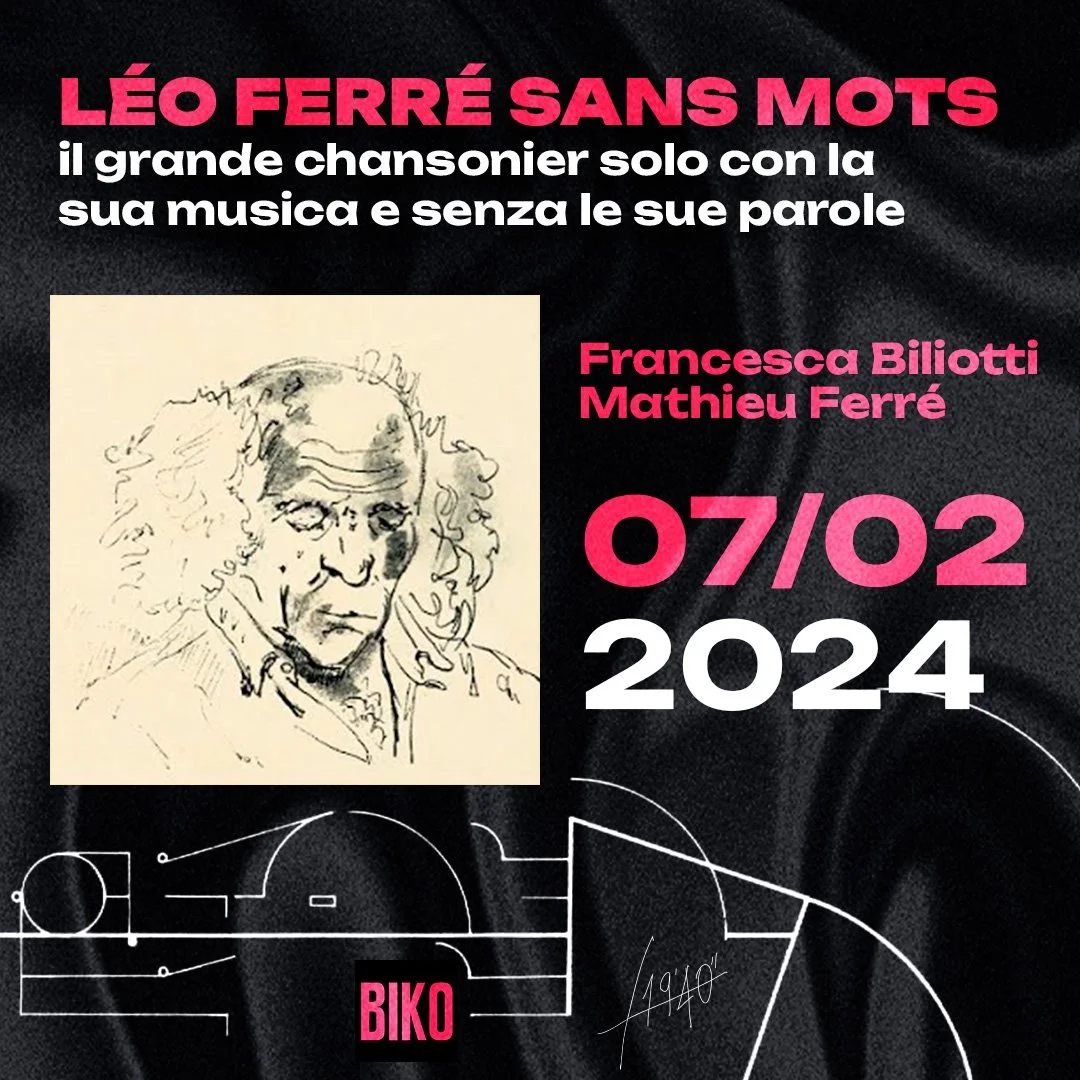
Léo Ferré sans mots live @BIKOclub
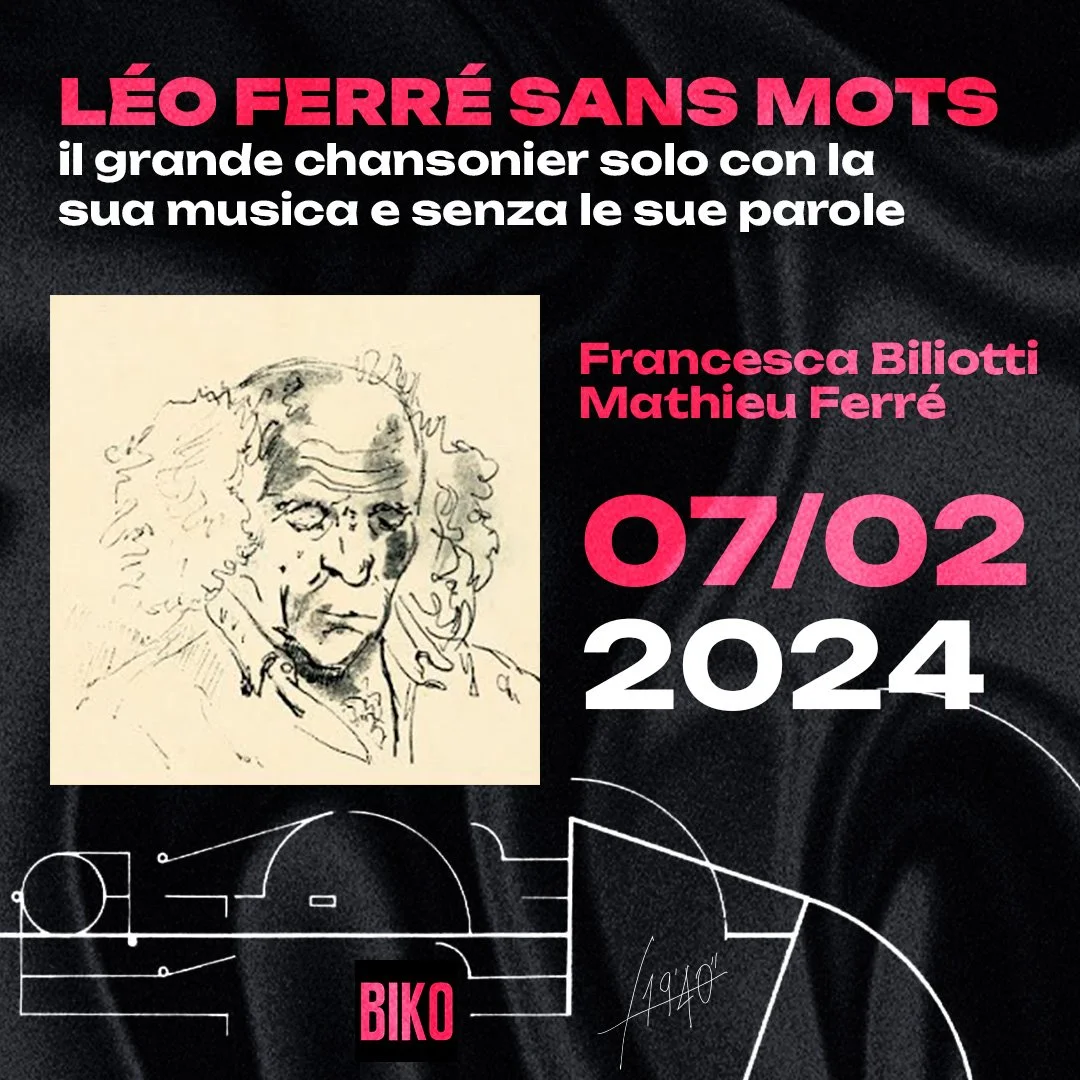
Definire Léo Ferré un cantautore anarchico è estremamente riduttivo: Ferré era poeta, scrittore, chansonnier e attore. Era anche compositore, arrangiatore e direttore d’orchestra: questo suo lato meno conosciuto è al centro della 22esima uscita di 19’40”: una retrospettiva sulla musica composta da Ferré. Una figura così complessa, multiforme e con così tante sfaccettature richiede ascolto, tempo, passione e curiosità. E quale persona potrebbe raccontare meglio Ferré se non proprio suo figlio Mathieu? 19’40” propone una serata di racconti, aneddoti, emozioni e di musica, naturalmente.
Se ancora non avete capito cosa succede a BIKO club il 7 Febbraio, ve lo spieghiamo attraverso la voce profonda di Enrico Gabrielli: abbiamo rubato due messaggi audio dalla nostra chat associativa. Potete ascoltare tutto qui.
I biglietti sono in prevendita su DICE: cliccando sul pulsante potete accedere alla pagina di Léo Ferré sans mots. Sarannno presenti anche alcuni musicisti che hanno partecipato all’incisione.
Abbiamo inciso Leo Ferré sans mots il 24 e 25 marzo 2023 presso il Banana Studio di Milano. L’ensemble era diretto da Marcello corti. In questo piccolo cortometraggio girato da Enrico Gabrielli potete vedere alcuni dei momenti (non necessariamente dei più significativi) dell'intera sessione in studio.

Puntuale Festival 2024

Una serie di appuntamenti di ascolto, musica e divulgazione a cura della crew di 19’40”, la collana di musica (anti)classica fondata nel 2016 da Gabrielli, De Gennaro e Fusaro. Musica scritta, sabotata, trascritta e raccontata con parole semplici a chiunque sia curioso di scoprire nuove modalità di approccio alla musica classica o contemporanea. Un appuntamento mensile al BikoClub, un posto significativo per Milano con una bellissima storia di concerti e di vita culturale. Con Enrico Gabrielli, Sebastiano De Gennaro, Francesco Fusaro, Marcello Corti, gli Esecutori di Metallo su Carta e ospiti.
10 gennaio 2024 ore 21:30 Musica Partecipativa

Musica per un pubblico performativo [musiche di Belshaw, De Gennaro, Cardew, Fusaro, Gabrielli]
Musica partecipativa è una serata musicalmente democratica dove le barriere tra chi suona, chi ascolta, chi esegue, chi partecipa, chi subisce e chi critica si dissolvono. Musica partecipativa è un’esperienza sonora realizzata dal pubblico su suggerimento, forse, del compositore. In un percorso di cinque tappe, gli Esecutori di Metallo su Carta raccontano, spiegano, mostrano e si mescolano al pubblico per fare chiarezza nello straordinario universo della musica sperimentale.
7 febbraio 2024 ore 21:30 Léo Ferré sans mots con Francesca Biliotti e Mathieu Ferré
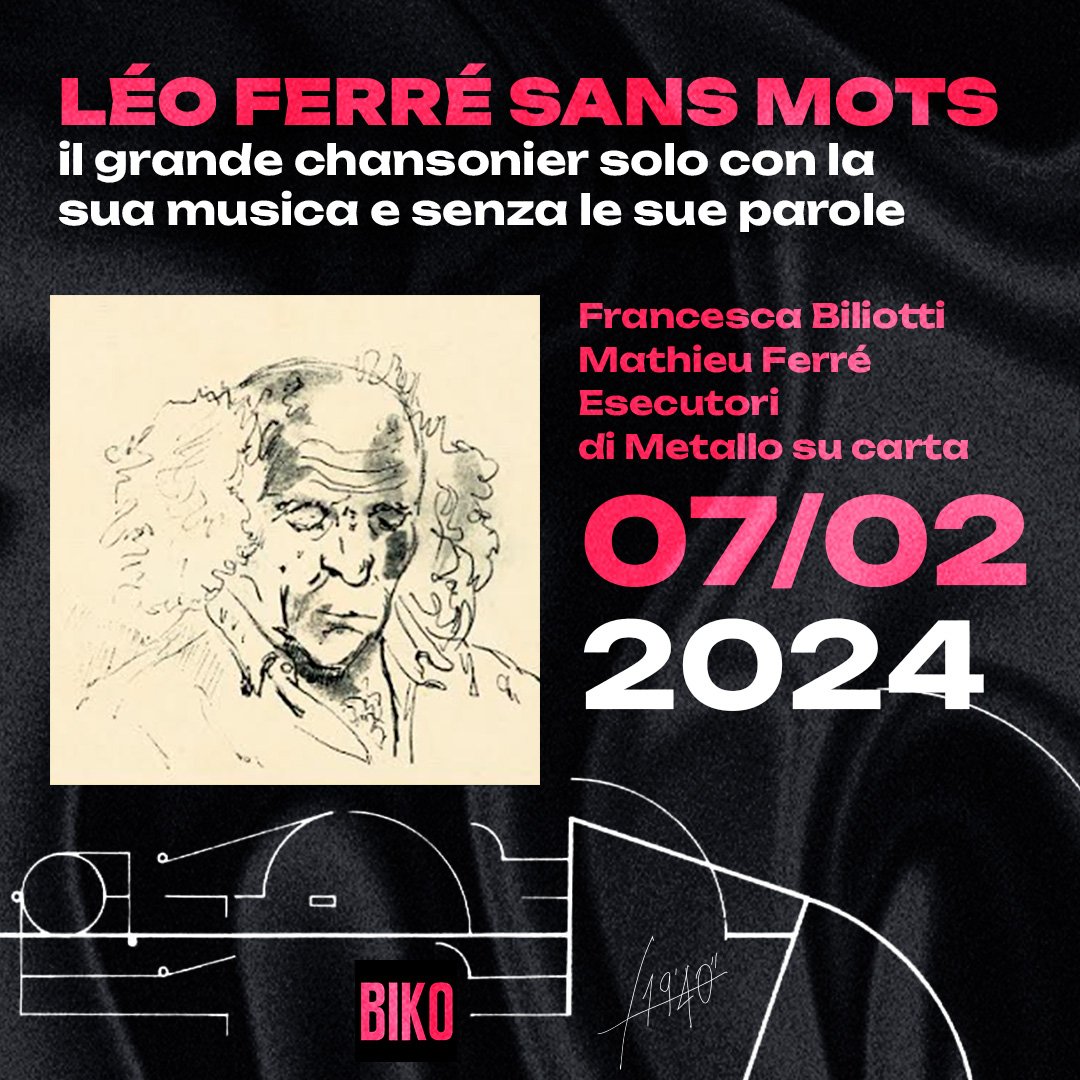
Definire Léo Ferré un cantautore anarchico è estremamente riduttivo: Ferré era poeta, scrittore, chansonnier e attore. Era anche compositore, arrangiatore e direttore d’orchestra: questo suo lato meno conosciuto è al centro della 22esima uscita di 19’40”: una retrospettiva sulla musica composta da Ferré. Una figura così complessa, multiforme e con così tante sfaccettature richiede ascolto, tempo, passione e curiosità. E quale persona potrebbe raccontare meglio Ferré se non proprio suo figlio Mathieu? 19’40” propone una serata di racconti, aneddoti, emozioni e di musica, naturalmente.
27 marzo 2024 ore 21:30 SHUT UP ‘N PLAY YER BIKE con Vincenzo Vasi e Sebastiano De Gennaro

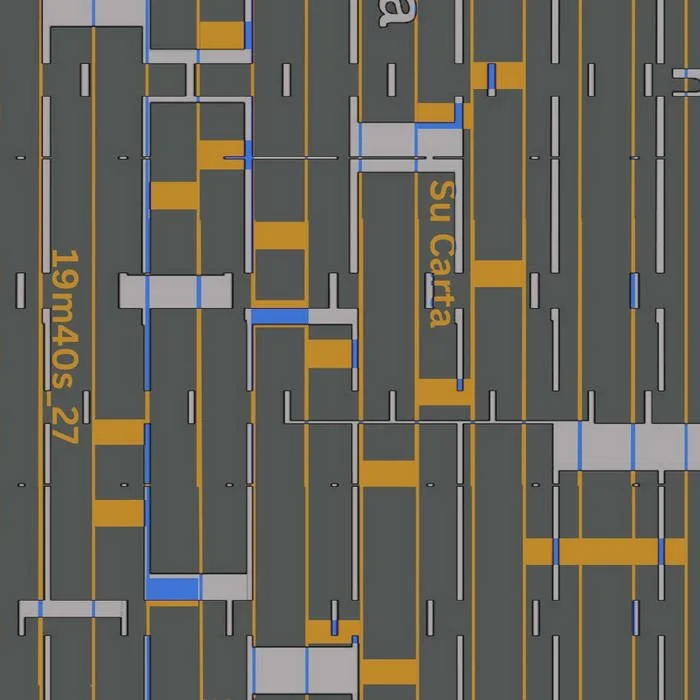
Era il 1963 quando un giovanissimo Frank Zappa, difficilmente riconoscibile in giacca e cravatta, comparve in televisione per suonare una bicicletta. Pochi anni prima, nel 1960, John Cage in persona, tra lo stupore del pubblico presente nello studio del programma TV “I’ve got a secret”, aveva eseguito Water Walk: lo spartito consisteva in un elenco di oggetti e la disposizione di questi nello spazio. La partitura era una timeline con descrizioni e notazioni pittoriche riguardanti alcune delle azioni da compiere nell’ordine di comparsa. Cinquant’anni sono passati, e ancora oggi le potenzialità espressive di una bicicletta non sono ancora del tutto esplorate. Ci pensano Sebastiano De Gennaro e Vincenzo Vasi a continuare una storia ancora incompleta di sperimentazione e di rifunzionalizzazione di oggetti.
10 aprile 2024 ore 21:30 Arcade Music, musica analogica e videogiochi con Damiano Afrifa e Luisa Santacesaria
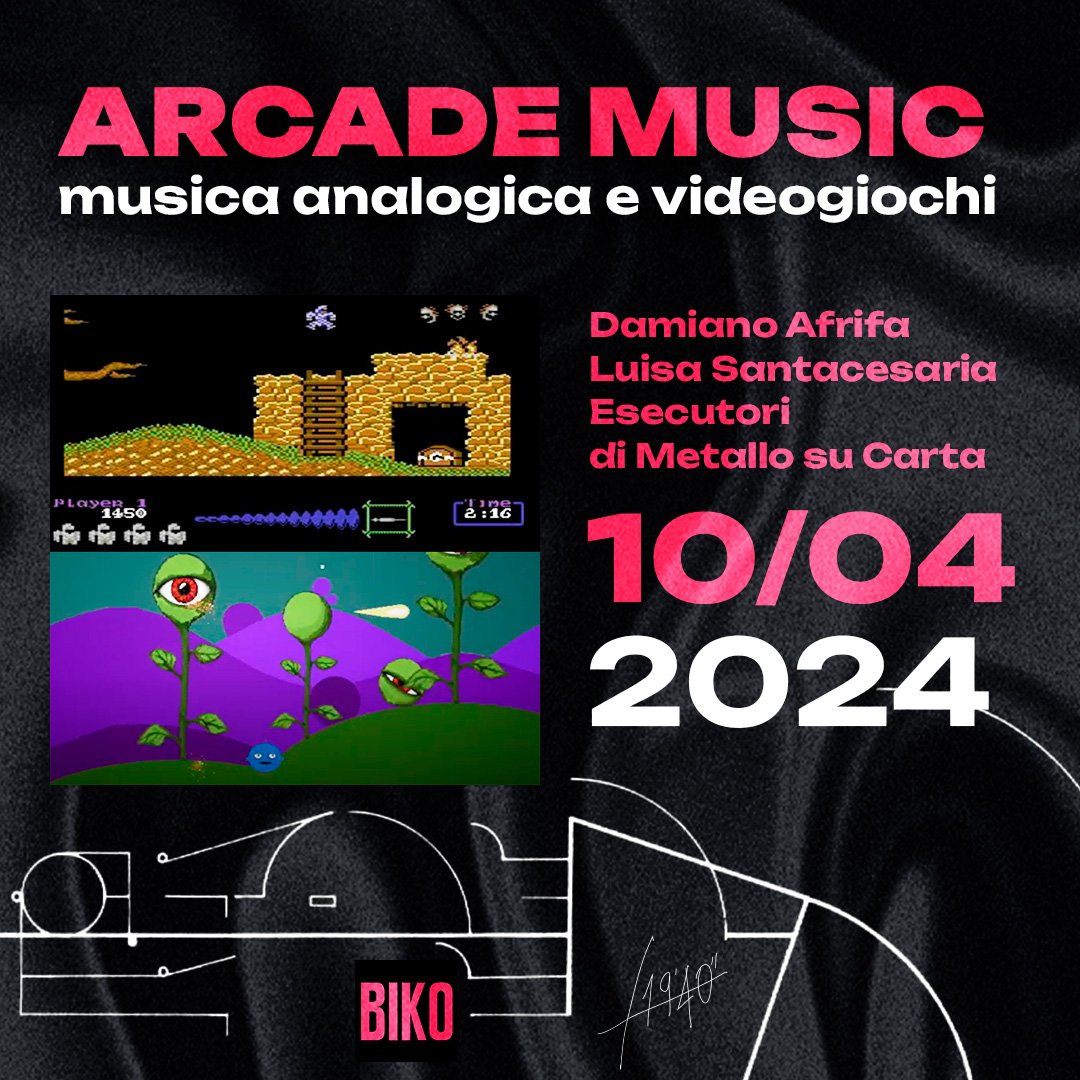
Esecutori di Metallo su Carta tornano in una formazione sintetica per offrire un’esperienza videoludica senza pari. Enrico Gabrielli, Sebastiano De Gennaro, Damiano Afrifa e Luisa Santacesaria eseguono la colonna sonora di Tz0, il videogioco creato da Sebastiano De Gennaro. Il pubblico avrà modo di giocare a questo semplice platform ascoltando la musica eseguita dal vivo. Non ci sarà un’orchestra, bensì un Juno, un Korg, un JEN e un Multivox. A coronare la serata, estratti da G.G.G., la 14esima uscita di 19’40” dedicata alla musica per videogiochi firmata Ayako Mori e Tim Follin.
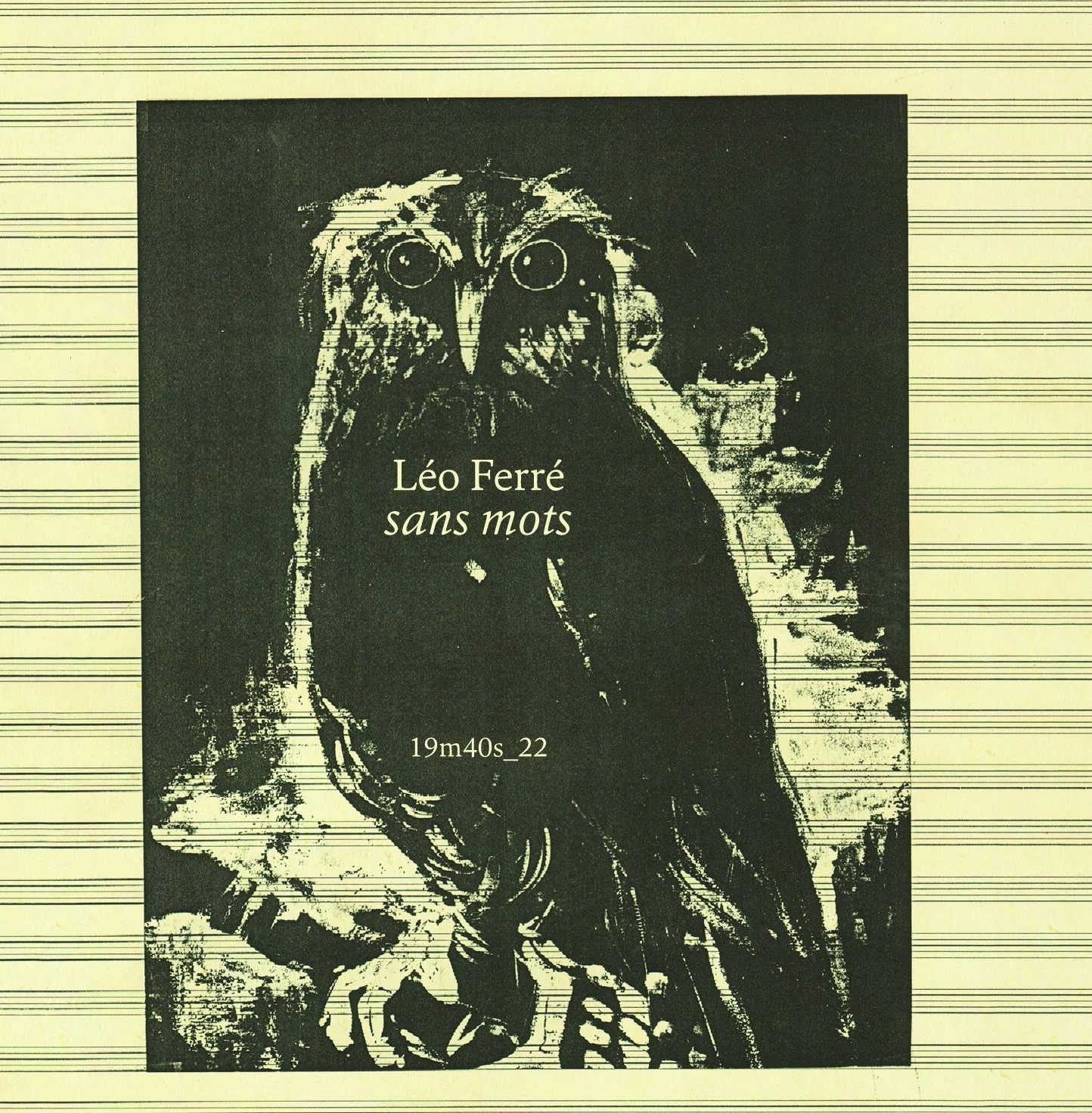
LEO FERRE SANS MOTS
Léo Ferré Sans Mots 19m40s_22

Ferré disegnato da Enrico
Il disco numero 22 della collana 19’40’’ è figlio di una scelta emotiva.
Prima di tutto per un legame spirituale con l’attitudine autarchica dell’uomo di cui stiamo per parlare (a noi di 19’40’’ l’autarchia e l’anarchia piacciono moltissimo…). E poi perché è la prima volta in assoluto che sentirete questa musica in questa veste.

I manoscritti di Léo Ferré
Stiamo parlando di una scelta di brani scritti e arrangiati dal grande Léo Ferré, in una versione “sans mots”, ovvero senza parole: a sua musica e il suo ingegno di compositore messo completamente a nudo nell’incanto della timbrica sinfonica, ridotta per l’occasione ad ensemble.
Gli Esecutori di Metallo su Carta diretti da Marcello Corti, eseguono questi dieci brani scritti in un arco di anni che vanno dal 1975 al 1992. L’excursus dell’album senza parole inizia, paradossalmente, con il brano “Des Mots” e conclude con “Words, words, words…” come a dire che le parole qui sono solo un pretesto per dire altro.
Come dice il figlio Mathieu Ferré, produttore assieme a noi in questa bellissima avventura “mio padre è stato soprattutto un compositore: la poesia, la sua parola e la sua interpretazione sono venute dopo. Se avesse potuto vivere esclusivamente della sua musica, è possibile che avrebbe composto di più e scritto molto meno.”
In questo disco vi sono anche due inediti compresi di testo e voce, composti nel 1992 che purtroppo Léo non riuscì ad incidere: “Liberté” e “Le Camelot”.
Liberté si avvale della ricostruzione della voce di Léo in AI ad opera di Francesco Fusaro, una scelta “forte” ma, a nostro avviso, musicologicamente interessante e rispettosa.
Le Camelot invece sembra un estratto della Thaïs di Massenet ed è per questo che abbiamo deciso di proporlo con l’ausilio della voce lirica del mezzo soprano Francesca Biliotti. Usando le parole di Mathieu “speriamo dal profondo del cuore che questa pubblicazione offra l’opportunità di scoprire la sua musica e che possa aprire la strada all’ascolto di queste opere ad un pubblico che ancora non le conosce.”
Tra tutti gli album prodotti sin qui da 19’40’’ questo è il disco più malinconico, sentimentale e struggente. Se “l’emozione” in questa musica fosse codificata col gesso di una formula matematica, la nostra lavagna sarebbe tutta un groviglio di segni bianchi.
Ci chiediamo se Léo, artista solitario e caparbio, capace di fronteggiare contro una tumultuosa enorme massa sinfonica avrebbe apprezzato questa veste “in miniatura” delle sue partiture.
Ma la risposta non possiamo far altro che lasciarla a voi.
The 22nd album in the 19’40’’ series uniquely explores Léo Ferré's music, titled "Sans Mots." It presents ten wordless tracks arranged by Ferré and performed by Metallo su Carta Conductors under Marcello Corti's direction. These pieces span from 1975 to 1992, including two unreleased songs, "Liberté" and "Le Camelot," the latter featuring mezzo-soprano Francesca Biliotti's voice.
Mathieu Ferré emphasizes his father's identity primarily as a composer, noting his passion for music preceding his poetry and interpretation. This album delves into Ferré's emotional depth through melancholic, poignant melodies. However, it remains uncertain whether Ferré, a resolute artist, would have embraced this "miniature" adaptation of his compositions. The project's core aim is to introduce audiences to Ferré's remarkable music and to provide an opportunity to appreciate his compositional genius beyond words. The use of AI for certain tracks and additional voices is deemed bold yet musically intriguing and respectful. Ultimately, how Ferré would have welcomed this new interpretation is open-ended, left to individual listeners' interpretation.
BCM#8: GEORGE WALKER
In August, Black Classical Music will be released, the twenty-first release by 19'40''. It includes works by Afro-descendant composers. In this series of articles, we tell the stories of the composers and their work.
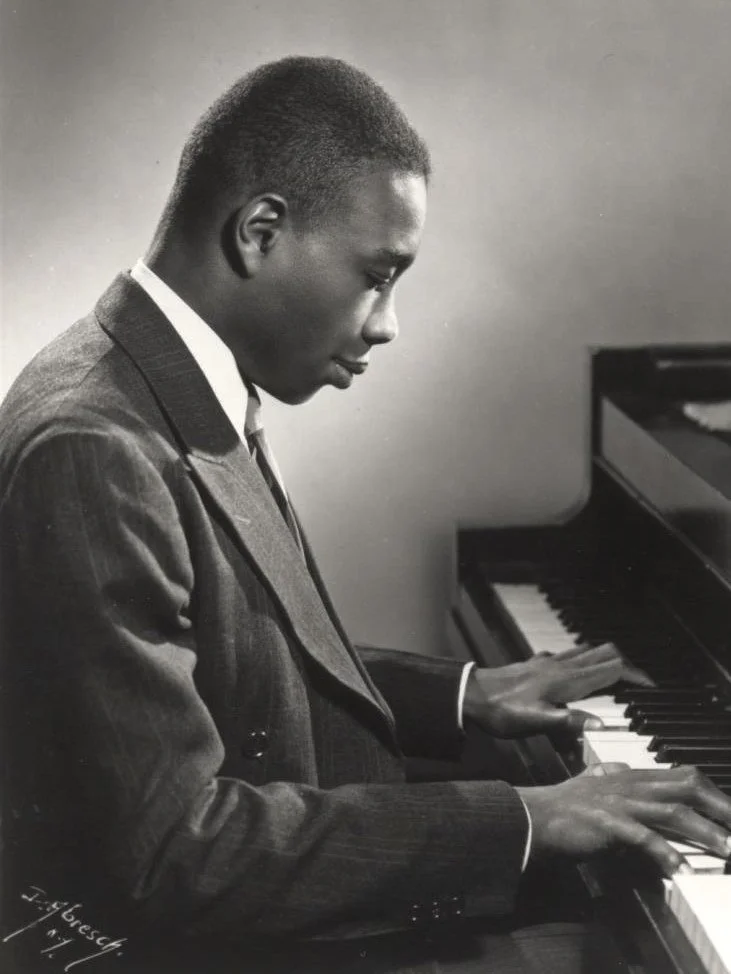
GEORGE WALKER

Di Unknown Photography Studio - Unknown, CC0, Collegamento
George Walker was a highly esteemed American composer who left an indelible mark on the classical music world. Born on June 27, 1922, in Washington, D.C., he achieved historical significance as the first African American composer to be honoured with the Pulitzer Prize for Music.
From an early age, Walker displayed exceptional talent as a pianist, which led to his admission to the prestigious Curtis Institute of Music in Philadelphia. Under the guidance of the legendary Beethoven interpreter Rudolf Serkin and the Italian composer Rosario Scalero, he honed his skills and unleashed his creative genius.
Walker’s compositional style was profoundly influenced by the likes of Johannes Brahms and Samuel Barber (who was taught by Scalero), resulting in a distinctive fusion of traditional forms with contemporary musical idioms. Notable works include the groundbreaking Lyric for Strings, the powerful Lilacs for voice and orchestra, and the last score he completed, Sinfonia No. 5 “Visions”.
Throughout his career, he received esteemed awards such as the Academy Award from the American Academy of Arts and Letters, the George Peabody Medal, and the George W. Chadwick Medal from the Boston Symphony.
Furthermore, George Walker made significant contributions as an educator, sharing his musical knowledge and passion with students at prestigious institutions such as Smith College, the Peabody Institute, and the University of Colorado. He passed away on August 23, 2018.
Bleu, for violin (Arr. for vibraphone)
George Walker's preference for the violin has a simple explanation: his son Gregory is a splendid violinist. In '58 and '79, father and son recorded together the two Sonatas for Violin and Piano. Bleu, dating back to 2012, was performed by Gregory himself at the Coolidge Auditorium in Washington DC. George Walker masterfully synthesises some of the predominant elements of the blues through highly sophisticated compositional gestures. Throughout the piece, lowered intervals of the third, fifth, and seventh are scattered. Amidst brief moments of lyricism intertwined with faster phrases, two fleeting nods to popular jazz melodies emerge. Sebastiano De Gennaro chooses to perform Bleu on the vibraphone, adding a softer glow to the cool brilliance of the metal, occasionally thawing the icy soundscape of the piece. This execution's detached colouring softens the composition’s harmonies, bringing them closer to a less academic sonic universe. Under this new light, Bleu becomes a work suitable for both grand showcases of contemporary classical music and an evening of solo vibraphone on the stage of Milan's Blue Note.
BCM#7: JULIUS EASTMAN
In August, Black Classical Music will be released, the twenty-first release by 19'40''. It includes works by Afro-descendant composers. In this series of articles, we tell the stories of the composers and their work.
JULIUS EASTMAN

Julius Eastman was an American composer and pianist renowned for his pioneering work in the realm of minimalist music. Born on 27th October 1940 in New York, Eastman’s life and career were marked by artistic innovation and an unwavering pursuit of unconventional musical expression.
Eastman’s musical style was characterised by what Alex Ross has described as “guerrilla minimalism.” He shook up traditional composition norms by incorporating elements of improvisation and experimentation into his works. In the 1970s, Eastman became closely associated with the influential Downtown New York music scene, collaborating with notable figures such as Meredith Monk. He even took on the uproarious role of George III in Peter Maxwell Davies’s Eight Songs for a Mad King, showcasing his versatility and captivating stage presence.
However, as an openly gay Black man in the predominantly white and heteronormative classical music world, Eastman faced an uphill battle. His career began to decline in the 1980s due to personal struggles, and he grappled with marginalization, financial difficulties, and homelessness, tragically resulting in the loss and destruction of a significant portion of his work.
Eastman’s life was cut short at the age of 49. He passed away on 28th May 1990, under circumstances that added to this remarkable musical talent’s tragic and untimely end.
Macle (Live version for five voices)
Alternative notations play an important role within the work of Esecutori di Metallo su Carta, both live and in the studio: Cardew's Treatise, Filidei's Toccata for Piano, and Della Marina's Fades/Constellations are some of the most visually intriguing pages tackled in recent years by our in-house ensemble. Julius Eastman's Macle fits perfectly within this departure from traditional notation. The score consists of only seven pages divided into rectangles and squares, which, when aligned, seem to recall an old Mickey Mouse comic: instead of ducks and mice, each panel is filled with lines, symbols, and texts. The ensemble consists of four voices: the performers must simultaneously read the panels and perform what is indicated within them. The performance is built by collectively deciding how to approach and interpret the graphic symbols, which are clear enough (there is only an autograph version for Macle), but not always unambiguous. The score indicates a duration of approximately 33 minutes; we present a version lasting only 11 minutes, performed live at Santeria during the ContempoRarities Festival on 5th December 2021. The performers, in this case, five members of Esecutori, were coordinated and guided by Francesco Fusaro, who also performs in it. Macle is simultaneously an exercise in style, avant-garde theatre, and a fascinating journey through new languages and sounds.
BCM#6 JOHN WESLEY WORK III
In August, Black Classical Music will be released, the twenty-first release by 19'40''. It includes works by Afro-descendant composers. In this series of articles, we tell the stories of the composers and their work.
JOHN WESLEY WORK III
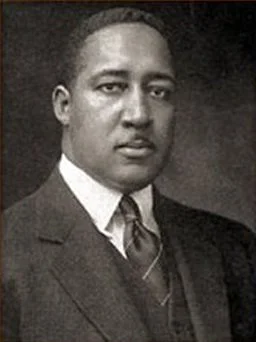
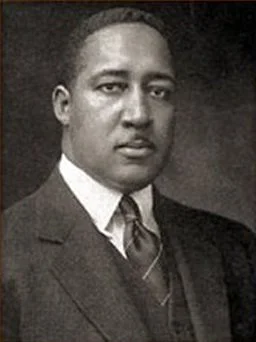
John Wesley Work III was a prominent African American composer, scholar, educator, and folklorist who made significant contributions to preserving and promoting African American music. Born on 15th September 1901 in Tullahoma, Tennessee, Work came from a distinguished musical family.
With a celebrated Fisk University Jubilee Singers member, John Wesley Work Jr., as his grandfather, and John Wesley Work II as his father, he inherited a treasured musical heritage firmly rooted in his family's distinguished lineage. Work's passion for music led him to become a versatile musician proficient in various instruments, including the violin, piano, and trombone.
Work's scholarly pursuits were equally remarkable. After completing his undergraduate studies at Fisk University, he pursued a master's degree in music from Northwestern University in 1927. He went on to earn a doctorate in musicology from the University of Chicago in 1941, becoming one of the first African Americans to achieve this distinction.
Work's compositions encompassed choral music, orchestral works, and solo pieces. His most notable composition, "Go Down, Moses," became an iconic spiritual arrangement, earning him widespread recognition.
Work was also an esteemed educator. He served as a faculty member at Fisk University for over forty years.
At A Certain Church & Ring Game
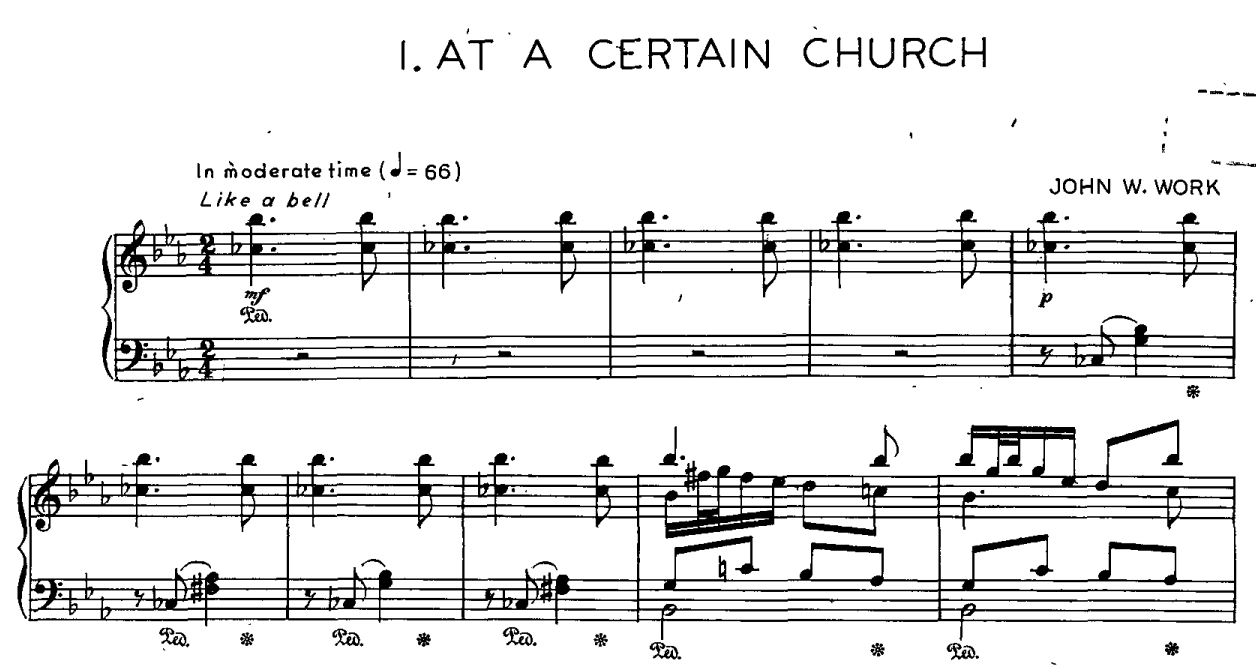
Out of the three movements comprising Scuppernong, "At A Certain Church" and "Ring Game" truly capture the essence of John Wesley Work III's microcosm. "Ring Game" is a concise composition that tips its hat to Béla Bartók's piano albums for small hands, an exceptional exemplar of ethnomusicology, harmonic exploration, rhythmic mastery, and pedagogy in the annals of human history. "Ring Game" is a simple and delicate solo piano piece, enriched with folk-inspired material and intriguing modal choices which evoke a profound sense of nostalgia. In "At A Certain Church," folk melodies make a comeback, intricately intertwined with one of the defining threads in Wesley Work III's oeuvre: choral music. The commencement of a prayerful moment is heralded by a recurring minor seventh interval. The non-religious activities transpiring outside the sacred confines, portrayed by a brief folk melody, are abruptly interrupted by the resonating call of the bell. As the congregation gathers within the hallowed space, they raise their voices in a harmonious chorus. Work III's evocative portrayal of religious devotion is subtly veiled with a touch of poignant affliction.
BCM#5: ROBERT NATHANIEL DETT
In August, Black Classical Music will be released, the twenty-first release by 19'40''. It includes works by Afro-descendant composers. In this series of articles, we tell the stories of the composers and their work.
ROBERT NATHANIEL DETT

Robert Nathaniel Dett was a highly accomplished African-American composer, pianist, and choral conductor. Hailing from Drummondville, Ontario, Canada, Dett exhibited prodigious musical talent from a tender age. He honed his musical skills at the prestigious Oberlin Conservatory of Music in Ohio, graduating with honours in 1908, becoming the first black individual to receive a music composition degree from the institution.
Dett held esteemed professorships at several educational establishments, including the Hampton Institute and Bennett College. At the core of his teaching philosophy was the belief in integrating African-American musical traditions into the academic curriculum, nurturing cultural pride and identity among his students.
Beyond his compositional achievements, Dett commanded great demand as a sought-after pianist and conductor. His captivating piano performances and masterful leadership of choral ensembles during extensive tours left audiences spellbound.
Throughout his illustrious career, Dett garnered numerous accolades for his remarkable contributions to the music world. His compositions, such as the acclaimed "The Chariot Jubilee" and "Listen to the Lambs," resonated deeply with audiences and critics alike. Dett's innovative musical style and his unwavering commitment to preserving African-American musical heritage firmly established him as a trailblazing figure in the annals of American music history.
Desert Interlude & Barcarolle of Tears (Arr. for vibraphone and piano)

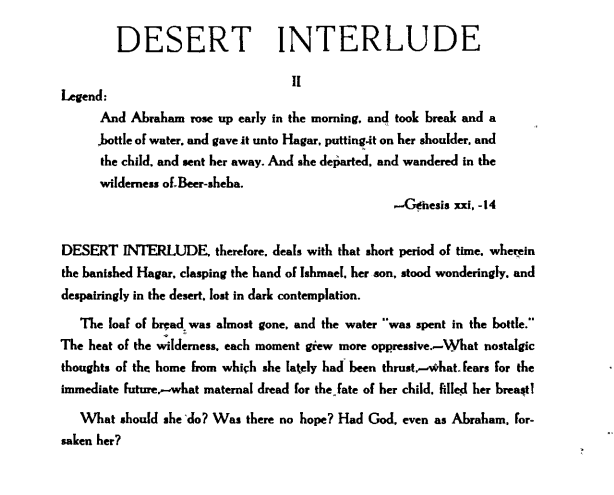
Eight Bible Vignettes is a collection of short solo piano compositions with a religious theme: each number's title page bears a precise biblical reference. The first three vignettes recount and depict episodes from the Old Testament. In "Desert Interlude" Robert Nathaniel Dett captures a very specific moment told in Genesis. Sarah, wife of Abraham, decided to give her slave Hagar to her husband with the intention of adopting her child. However, when the child is born, Sarah begins to resent Hagar's presence. Abraham is forced to cast out Hagar, leaving her and their son Ishmael in the desert. Desperate, Hagar becomes lost in the wilderness of Beersheba. As provisions run out, she finds herself lost in a moment of contemplation, reminiscing with nostalgia about the home from which she was banished and shedding tears of maternal love for her son's uncertain future. These are the evocative impressions that Dett captures on paper in writing "Desert Interlude." On the other hand, "Barcarolle of Tears" is a piece without direct references to biblical events, serving as a separator between the compositions related to the Old Testament and those that recount stories from the New Testament.