Un certo gusto contemporaneo
Una contraddizione che balza all’occhio della musica contemporanea in Italia è la declinazione del senso del piacere, che molto ha di classico-romantico e poco di scientifico. Questo perché la scrittura musicale, nella sua versione “complessa”, si insegna negli istituti, nelle accademie e nei Conservatori, dove in tutte le aule risuonano le note dei compositori capisaldi. A conseguenza di ciò, malgrado si usi “polarizzare” i materiali e raggiungere il punto di interesse formale attraverso i “transitori d’attacco”, vige spesso una certa ossessiva ricerca melodica. E pure quella armonica.
Persistono indicazioni a piè di pentagramma come “espressivo” o “con fuoco”, e malgrado si usi mettere i metronomi come indicatori di velocità sopravvivono ancora l'“allegro” o l'“adagio”. In classe di composizione si citava Brahms come esempio di gestione della scrittura pianistica, mentre Berio nominava continuamente Schubert (lo ha anche restaurato - vedi Rendering) e l'analisi è ancora concentrata sui francesi di fine ottocento e i tedeschi di fine Settecento. I modelli di studio restano quelli e il secolo Novecento assomiglia ad un diamante da baseball con le quattro basi dove ci si aggrappa per sfuggire alle palle: la prima scuola di Vienna, la seconda scuola di Vienna, i Ferienkurse di Darmstadt, i francesi all’IRCAM. In Italia, per quello che è stata la mia modesta esperienza di studio soprattutto alla fine degli anni novanta, è da qui che si passava. Del totale ostracismo verso la cultura anglofona e fiamminga non si parlava nemmeno: semplicemente era in atto. L’ipotesi di un concerto con un programma che comprendesse Helmut Lachenmann e Louis Andriessen era blasfema. Ricordo ancora quando suonavo nel defunto Ensemble Risognanze con i gagliardi Tito Ceccherini e Alfonso Alberti, ormai luminari del settore, programmi monolitici con solo compositori italiani, o solo compositori francesi e magari in mezzo una rielaborazione di un qualche classico. I programmi erano spesso tenuti insieme da una scelta monografica o da un’anniversario di morte/nascita/ricorrenza, il tutto motivato in una brochure formato A4 ripiegata, con note critiche. Il risultato era un impegno eccessivo per l’esecutore e un’indubbia fatica per gli ascoltatori – ancora ricordo un programma solo Gerard Grisey con “Vortex Temporum” I, II, III e “Talea”, per un totale di 60 minuti di grazioso
spettralismo. Il pubblico di certi contesti è una ristretta selezione di aficionados, assemblati con tempo e pazienza; la schiuma di una tazza di latte delle grandi masse di abbonati classicofili. Si tratta di gente che applaude sempre e comunque, e che non è determinante per la vita economica delle istituzioni della musica contemporanea, istituzioni che si reggono in piedi con fondi privati, sponsorship, sovvenzioni comunali, regionali od europee. Così il Divertimento Ensemble si può permettere di fare un concerto a base solo di Sciarrino: e ben venga! Ma ci si provi a confrontare quella musica giocando l’azzardo di portarla laddove il pubblico è candido, ignaro e (perché no?) disabituato?
Nella vita extra-istituzionale il plauso del pubblico non è garantito e la vita economica di un artista, nel bene e nel male, deve fare i conti con questo dato di fatto.
Nella restituzione di un’opera alla collettività (Romitelli si esprimerebbe così...) attraverso un impaginato di sala, credo che ci siano più parentele tra Niccolò Castiglioni e John Adams che tra Franco Donatoni e Franco Donatoni.
Con il titolo del programma Maximalist/Minimalist si potrebbe indicare un estremo politico, più che musicale: massimalista potrebbe essere la musica che tende ad un astratto "Erfurter programm" dell'ascolto e musica minimalista quella che si toglie di dosso il peso di molti parametri.
Semplicemente è una scatola sonora dove inserire cose estremamente diverse tra loro, cose che potrebbero anche non piacere agli stessi organizzatori, o agli stessi musicisti. Ma potrebbero assolvere al difficile compito di aiutare il pubblico a COMPRENDERE le cose nella loro diversità, nel senso etimologico di prendere “con”, assieme e non da soli.
La declinazione del senso del piacere dovrebbe essere al servizio del prossimo, legato a scelte prima di tutto narrative e non solo estetiche. O peggio: mono-identitarie.
Fare sentire della musica a della gente non significa né esprimere se stessi, né lasciare la gente da sola in balia delle compulsioni: significa, per un musicista, divenire medium e fornire strumenti d’ascolto.
Alla gente poco importa il pedigree dell’ensemble o la perfezione di un’esecuzione: prima di tutto, a loro serve la scoperta e la freschezza della proposta.
Mettere un brano di Fausto Romitelli a fianco ad uno di Arvo Pärt in un rock-club è un tentativo più scientifico di quanto la contemporanea italiana non possa immaginare.
Anche questo è utile per disperdere quella sensazione di essere ad un funerale, con gente vestita in nero, severa, rigida e lontana dalla realtà.
EG
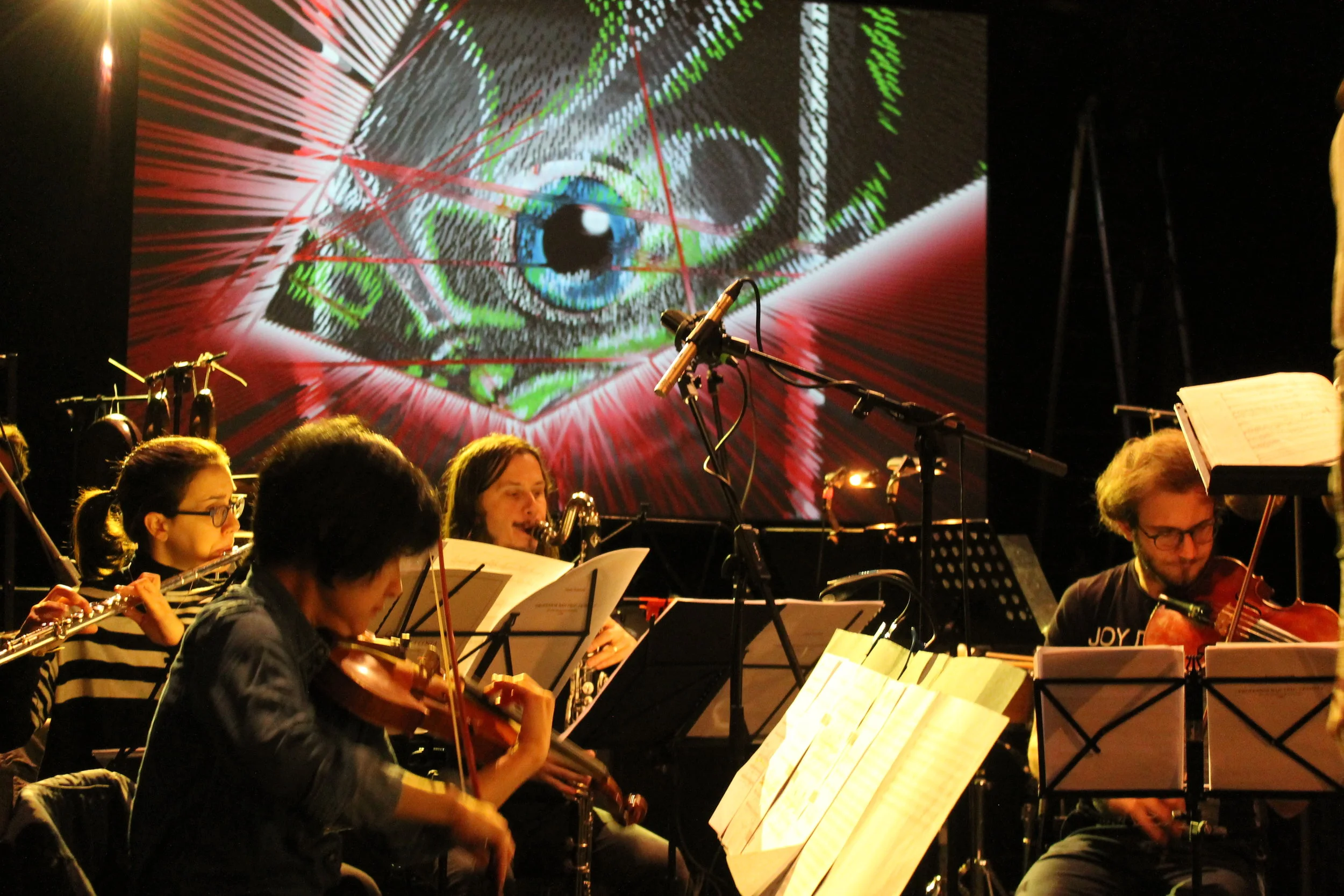
Esecutori di Metallo su Carta, in prova su Professor Bad Trip: lesson I di F.Romitelli
Marcello Corti, direzione
Andrew Quinn, visual
Carlotta Raponi, flauto/Enrico Gabrielli, clarinetto/Yoko Morimyo, violino/Marco Scandura, viola/Matteo Vercelloni, violoncello/Alessandra Novaga, chitarra elettrica/Damiano Afrifa, pianoforte e tastiera/Sebastiano De Gennaro, percussioni/Matteo Lenzi, percussioni

The twenty-seventh issue of our recording series presents Su Carta, a fully composed album by Francesco Fusaro for violin, clarinet, vibraphone, double bass, human voice and a TB-303 clone, reflecting on environment, memory, animals, and the act of composition itself. For more information on the music content, please visit here.
Price includes VAT. Delivery prices are available at checkout.
Subscriber Discount: If you are buying one or more copies of this item together with a subscription, or if you have already subscribed, please get in touch with us to redeem a discount on your purchase.

The twenty-first issue of our recording series takes a deep dive into the repertoire of classical Afro-descendant composers. For more information on the music content, please visit here. Price includes VAT. Delivery prices available at checkout.
Subscriber Discount: If you are buying one or more copies of this item together with a subscription, or if you have already subscribed, please get in touch with us to redeem a discount on your purchase.

The twentieth issue of our recording series pays homage to one of the most iconic compositions in European art music. For more information on the music content, please visit here. Price includes VAT. Delivery prices available at checkout.
Subscriber Discount: If you are buying one or more copies of this item together with a subscription, or if you have already subscribed, please get in touch with us to redeem a discount on your purchase.

The eighteenth issue of our recording series is the result of our first Call For Score. It offers a snapshot of the state of the Italian and international contemporary music scene. For more information on the music content, please visit here. Price includes VAT. Delivery prices available at checkout.
Subscriber Discount: If you are buying one or more copies of this item together with a subscription, or if you have already subscribed, please get in touch with us to redeem a discount on your purchase.

The very first issue of our recording series. For more information on the music content, please visit this page. Price includes VAT. Delivery prices available at checkout.
Subscribers Discount: If you are buying one or more copies of this item together with a subscription, or if you have already subscribed, please get in touch with us to redeem a discount on your purchase.

The second issue of our recording series is an Italian take on Stravinsky's original. For more information on the music content, please visit this page. Price includes VAT. Delivery prices available at checkout.
Subscriber Discount: If you are buying one or more copies of this item together with a subscription, or if you have already subscribed, please get in touch with us to redeem a discount on your purchase.

The sixth issue of our recording series is a live recording of the ensemble version of Holst’s masterpiece, arranged by Enrico Gabrielli. For more information on the music content, please visit here. Price includes VAT. Delivery prices available at checkout.
Subscriber Discount: If you are buying one or more copies of this item together with a subscription, or if you have already subscribed, please get in touch with us to redeem a discount on your purchase

The seventh issue of our recording series is a survey on the music of neglected electronic music pioneer Chino ‘Goia’ Sornisi. For more information on the music content, please visit here. Price includes VAT. Delivery prices available at checkout.
Subscriber Discount: If you are buying one or more copies of this item together with a subscription, or if you have already subscribed, please get in touch with us to redeem a discount on your purchase.

The eighth issue of our recording series is a retrospective journey through the catalogue of library and art music composer Paolo Renosto, aka Lesiman. For more information on the music content, please visit here. Price includes VAT. Delivery prices available at checkout.
Subscriber Discount: If you are buying one or more copies of this item together with a subscription, or if you have already subscribed, please get in touch with us to redeem a discount on your purchase.

The tenth issue of our recording series is an acoustic version for chamber ensemble of one of the greatest music oddities of 70s North America: Mort Garson’s album dedicated to our friends the plants. For more information on the music content, please visit here. Price includes VAT. Delivery prices available at checkout.
Subscriber Discount: If you are buying one or more copies of this item together with a subscription, or if you have already subscribed, please get in touch with us to redeem a discount on your purchase.

The eleventh issue of our recording series is a new arrangement of one of Karlheinz Stockhausen’s most famous compositions, “Tierkreis”. For more information on the music content, please visit here. Price includes VAT. Delivery prices available at checkout.
Subscriber Discount: If you are buying one or more copies of this item together with a subscription, or if you have already subscribed, please get in touch with us to redeem a discount on your purchase.

The twelfth issue of our recording series is dedicated to the genius of Bernard Hermman, with a focus on his music for the sci fi cult series The Twilight Zone. For more information on the music content, please visit here. Price includes VAT. Delivery prices available at checkout.
Subscriber Discount: If you are buying one or more copies of this item together with a subscription, or if you have already subscribed, please get in touch with us to redeem a discount on your purchase.

The fifteenth issue of our recording series is dedicated to the first 88 pages of a graphic notation classic, Cornelius Cardew’s Treatise. For more information on the music content, please visit here. Price includes VAT. Delivery prices available at checkout.
Subscriber Discount: If you are buying one or more copies of this item together with a subscription, or if you have already subscribed, please get in touch with us to redeem a discount on your purchase.

The sixteenth issue of our recording series is a collection of four works by Arvo Pärt, Florence Price, Giacinto Scelsi and Franco Battiato. For more information on the music content, please visit here. Price includes VAT. Delivery prices available at checkout.
Subscriber Discount: If you are buying one or more copies of this item together with a subscription, or if you have already subscribed, please get in touch with us to redeem a discount on your purchase.
The seventeenth issue of our recording series is a collection of six original compositions by Sebastiano De Gennaro. For more information on the music content, please visit here. Price includes VAT. Delivery prices available at checkout.
Subscriber Discount: If you are buying one or more copies of this item together with a subscription, or if you have already subscribed, please get in touch with us to redeem a discount on your purchase.

For the first time, you can now aquire the original art created for our cover design. Created by Italian artist Annalisa “Nali” Limonta, who is also behind our beautiful “Plantasia” booklet and CD design, the artwork for our 18th release, “Call For Scores”, is now available in a unique piece for your personal collection.