
CLASSICA NEL GIUSTO CAOS
Facciamo finta di fare uno zoom satellitare in stile Google: in Ungheria c’è Budapest, a Budapest c’è il Danubio, nel Danubio c’è un’isola dove si svolge da 24 anni lo Sziget Festival, conosciuto tra i tanti italiani come “il” vero paese dei balocchi agostano.
Mi si disse, tempo addietro, che lo Sziget prese le mosse ispirandosi ad Arezzo Wave.
Potrebbe essere davvero stato così, ma la differenza tra i due festival è la stessa che intercorreva tra l’arco e le frecce dei Troiani e i droni dell’attuale esercito americano.
I festival come questo non hanno solo musica, ma centinaia di attrazioni teatrali, installative, ludiche e spazi diversificati adatti a piccoli e adulti.
Ne esistono altri festival in Europa di questo genere: il Down The Rabbit Hole, il Roskilde, il Glastonbury, simili tra loro e allo stesso tempo diversi per cultura e gusto nazionale. Ad esempio l'english mud mette a dura prova il fisico, la liberalizzazione olandese stuzzica lo sfascio con canne e funghi, il freddo proverbiale agostano della Danimarca mantiene giovane la pelle.
In altri festival il focus è ancora sull’affaire “musica”; come l’Off di Katowice, il Pitchfork di Chicago e l’imprescindibile Primavera Sound, della tanto amata Barcellona.
Lo Sziget sul piano dell’offerta rock popular non pare brillare né in gusto né in fascino.
Però c’è qualcosa che altrove non ho visto: uno spazio (al chiuso) dedicato alla danza e un altro (all’aperto ma con copertura) dedicato alla classica; la “musica classica”, ovviamente, in senso lato.
In questo spazio ogni pomeriggio c’è un’orchestra che fa brandelli di opere liriche (!), dal tardo pomeriggio la proiezione di un film muto sonorizzato dal vivo, la sera una programmazione a cura della Non-Classical di Gabriel Prokovief, nota etichetta che si occupa (se così possiamo mal-dire), di classica “indipendente” e di vare accezioni, paciugate o meno, di musica contemporanea.
La gente, che sarebbe meglio definirla come “gioventù” visto che all’orizzonte pare difficile incontrare qualcuno più vecchio di trent’anni, se ne sta sdraiata su dei puff in totale relax e resta lì ore.
Oltre al fascino dei tipi di musiche in sé, questo spazio è un’oasi di calma in un Caos con la C maiuscola ed è a suo modo l’unica vera proposta alternativa dell’intera programmazione megalitica.
Ricordo che all’Øyafestivalen di Oslo vidi in programma sul main stage qualcosa di Steve Reich e questo mi fa pensare che stia nascendo di tanto in tanto un fungo primordiale di un qualcosa in cui, noi di 19’40’’, ci sentiamo essere parte.
Scardinando il contesto si fa la vera operazione di sabotaggio da cui può scaturire una sana sorpresa e una sincera scoperta: il rock, pop, alternative, noise, cantautorato, elettronica, etcetera etcetera in un festival sono nel loro ambiente esattamente come il prete in una chiesa.
Lì mettere sul palco cose che non c’entrano nulla, farebbe scaturire il cortocircuito, quello vero, senza alcun gioco di ruolo sul culto della personalità che a volte maschera la reale validità
della musica, delle parole, dei concetti.
Piazzare un’orchestra sinfonica in un festival “indie”, organizzare dei matinee alle 6AM di musica antica in un centro sociale (se esistessero ancora), portare musica contemporanea nei rock club: un assalto culturale, un modo per prendere alla sprovvista l’ignaro avventore e rendergli un caso improvviso nella sua vita di fruitore.
Magari la sua vita, da ascoltatore, dopo cambia.
Magari non pensava esistessero certe cose.
Magari non gliene frega un fico secco, ma almeno gli è stata data l’occasione.
Non parliamo di fare del jazz dove non si fa del jazz o un concerto rock nell’intoccabile auditorium sinfonico: parliamo di aderire e rendere la decontestualizzazione un fatto naturale e una proposta assidua, continua e costante.
Così tu sai che a quel festival, in quel punto là, ci sarà sempre qualcosa di alieno: sai che il contesto ti fornisce anche il suo contrario, la sua negazione.
Allo Sziget si chiama Papageno Classical, Opera Stage.
Abbiamo tentato un approccio al nostrano MIAMI quest’anno con Esecutori di Metallo su Carta.
Un tentativo un po’ troppo timido, ahi noi.
Se in Italia esiste qualcosa di simile, prego qualcuno ce lo dica che noi di 19’40’’ ne abbiamo disperato bisogno.
EG
Facciamo finta di fare uno zoom satellitare in stile Google: in Ungheria c’è Budapest, a Budapest c’è il Danubio, nel Danubio c’è un’isola dove si svolge da 24 anni lo Sziget Festival, conosciuto tra i tanti italiani come “il” vero paese dei balocchi agostano.
Mi si disse, tempo addietro, che lo Sziget prese le mosse ispirandosi ad Arezzo Wave.
Potrebbe essere davvero stato così, ma la differenza tra i due festival è la stessa che intercorreva tra l’arco e le frecce dei Troiani e i droni dell’attuale esercito americano.
I festival come questo non hanno solo musica, ma centinaia di attrazioni teatrali, installative, ludiche e spazi diversificati adatti a piccoli e adulti.
Ne esistono altri festival in Europa di questo genere: il Down The Rabbit Hole, il Roskilde, il Glastonbury, simili tra loro e allo stesso tempo diversi per cultura e gusto nazionale. Ad esempio l'english mud mette a dura prova il fisico, la liberalizzazione olandese stuzzica lo sfascio con canne e funghi, il freddo proverbiale agostano della Danimarca mantiene giovane la pelle.
In altri festival il focus è ancora sull’affaire “musica”; come l’Off di Katowice, il Pitchfork di Chicago e l’imprescindibile Primavera Sound, della tanto amata Barcellona.
Lo Sziget sul piano dell’offerta rock popular non pare brillare né in gusto né in fascino.
Però c’è qualcosa che altrove non ho visto: uno spazio (al chiuso) dedicato alla danza e un altro (all’aperto ma con copertura) dedicato alla classica; la “musica classica”, ovviamente, in senso lato.

In questo spazio ogni pomeriggio c’è un’orchestra che fa brandelli di opere liriche (!), dal tardo pomeriggio la proiezione di un film muto sonorizzato dal vivo, la sera una programmazione a cura della Non-Classical di Gabriel Prokovief, nota etichetta che si occupa (se così possiamo mal-dire), di classica “indipendente” e di vare accezioni, paciugate o meno, di musica contemporanea.
La gente, che sarebbe meglio definirla come “gioventù” visto che all’orizzonte pare difficile incontrare qualcuno più vecchio di trent’anni, se ne sta sdraiata su dei puff in totale relax e resta lì ore.
Oltre al fascino dei tipi di musiche in sé, questo spazio è un’oasi di calma in un Caos con la C maiuscola ed è a suo modo l’unica vera proposta alternativa dell’intera programmazione megalitica.
Ricordo che all’Øyafestivalen di Oslo vidi in programma sul main stage qualcosa di Steve Reich e questo mi fa pensare che stia nascendo di tanto in tanto un fungo primordiale di un qualcosa in cui, noi di 19’40’’, ci sentiamo essere parte.
Scardinando il contesto si fa la vera operazione di sabotaggio da cui può scaturire una sana sorpresa e una sincera scoperta: il rock, pop, alternative, noise, cantautorato, elettronica, etcetera etcetera in un festival sono nel loro ambiente esattamente come il prete in una chiesa.
Lì mettere sul palco cose che non c’entrano nulla, farebbe scaturire il cortocircuito, quello vero, senza alcun gioco di ruolo sul culto della personalità che a volte maschera la reale validità
della musica, delle parole, dei concetti.
Piazzare un’orchestra sinfonica in un festival “indie”, organizzare dei matinee alle 6AM di musica antica in un centro sociale (se esistessero ancora), portare musica contemporanea nei rock club: un assalto culturale, un modo per prendere alla sprovvista l’ignaro avventore e rendergli un caso improvviso nella sua vita di fruitore.
Magari la sua vita, da ascoltatore, dopo cambia.
Magari non pensava esistessero certe cose.
Magari non gliene frega un fico secco, ma almeno gli è stata data l’occasione.
Non parliamo di fare del jazz dove non si fa del jazz o un concerto rock nell’intoccabile auditorium sinfonico: parliamo di aderire e rendere la decontestualizzazione un fatto naturale e una proposta assidua, continua e costante.
Così tu sai che a quel festival, in quel punto là, ci sarà sempre qualcosa di alieno: sai che il contesto ti fornisce anche il suo contrario, la sua negazione.
Allo Sziget si chiama Papageno Classical, Opera Stage.
Abbiamo tentato un approccio al nostrano MIAMI quest’anno con Esecutori di Metallo su Carta.
Un tentativo un po’ troppo timido, ahi noi.
Se in Italia esiste qualcosa di simile, prego qualcuno ce lo dica che noi di 19’40’’ ne abbiamo disperato bisogno.

EG
Il Picchio di Sebastiano De Gennaro
Cosa poteva essere per l’ominide nella preistoria il suono? La percezione del suono ed il suo utilizzo? Non lo sappiamo, o lo sappiamo in parte. Probabilmente passava attraverso la voce, ma contemporaneamente, e forse prima, era la percussione.
Forza gravitazionale: è in questa attrazione naturale della terra che si spiega e si manifesta il gesto del percuotere, ciò che permette di percepire il peso, la caduta ed il suono. Un processo che sul nostro pianeta si ripete ogni momento, da sempre, e che effettivamente può esser considerato l’origine più remota ed arcaica della musica.

Prendiamo ad esempio un animale, il Picchio. La sua percussione è rapida e precisa come se fosse quantizzata da un software ‘beat detective’, è scandita nel tempo con pause non casuali, il timbro varia se il picchio batte sul legno, sul metallo o sulla pietra; è un linguaggio complesso, so che è estremamente antico eppure suona alle mie orecchie spaventosamente moderno. Così è proprio il percuotere del picchio ad essere la perfetta metafora per descrivere ciò che è questo disco: una raccolta di forme e linguaggi musicali complessi che adoperano il mezzo primitivo della percussione.
Percussione ed elettronica, un meraviglioso connubio di genesi e sviluppo, il senso del tempo, l’origine e l’evoluzione.
Il Picchio, l’imminente terza uscita 19’40”, è un disco a cui pensavo da tempo, un’impresa che finalmente realizzo: raccogliere cinque composizioni per percussione sola ed elettronica di autori viventi ed in attività (alcuni molto giovani) che nel DNA contengano il gesto primordiale della percussione ed il suono evoluto dell’era digitale. Louis Andriessen, David Lang, Edmund Campion, Nikolay Popov ed Enrico Gabrielli (la cui composizione Coppia di Allotropi del 2017 prende forma per la prima volta su questo disco) sono i protagonisti de Il Picchio ed assieme alla loro rara e bellissima musica, hanno dato concretezza a quest’opera il violino e la viola di Yoko Morimyo, il mix di Roberto Rettura, i disegni di Pietro Puccio, le parole e le idee di Francesco Fusaro.
Sebastiano de Gennaro
The Teeth of the Cow
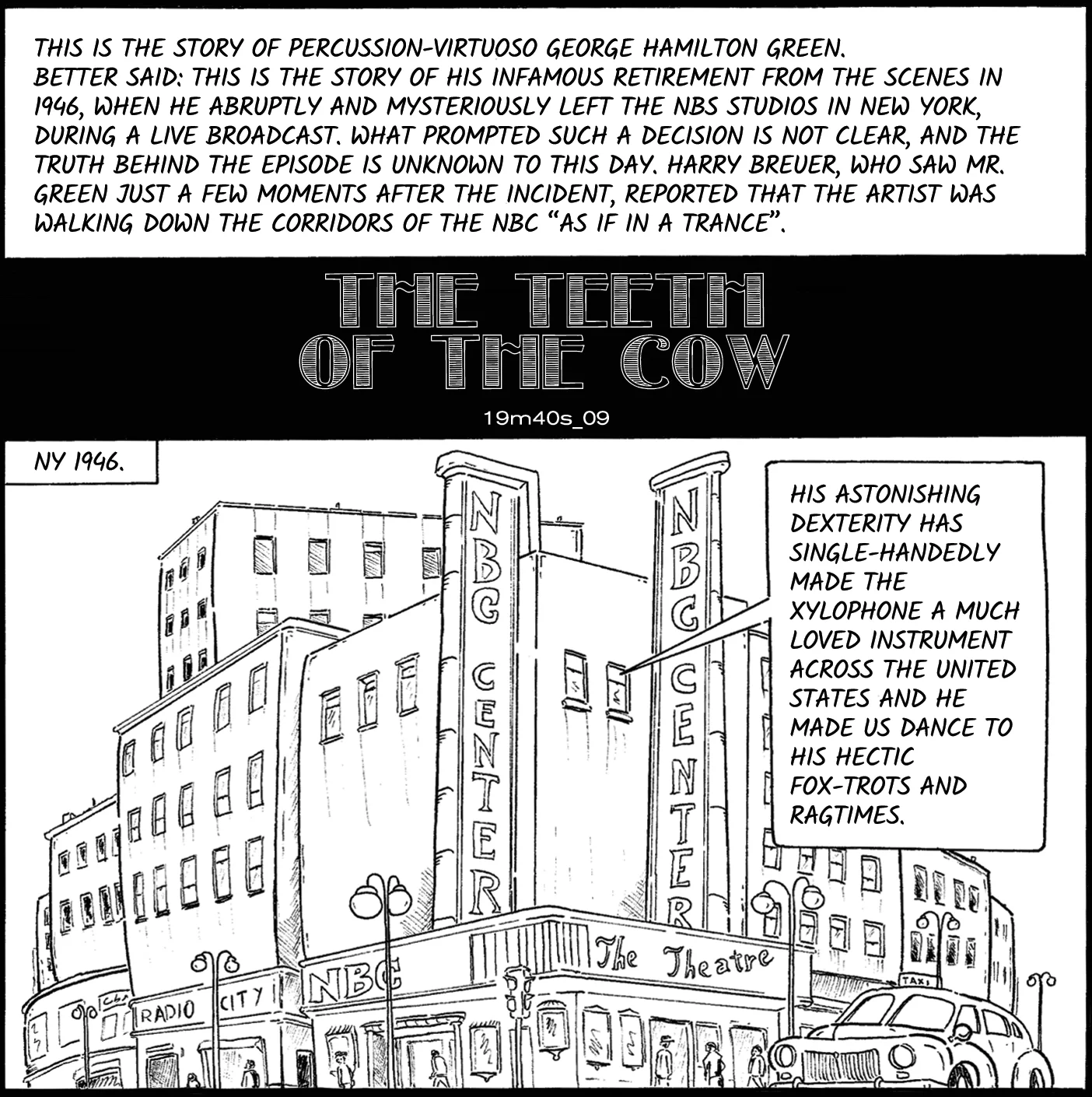
George Hamilton Green (1893 – 1970), musician, composer, Foley artist, cartoonist, xylophone virtuoso: the seventh issue by 19'40'' will be dedicated to the music of this gifted, if rather obscure, artist.
But let's start from the beginning, from 1916 America, when George Hamilton and his brother Joe, a musician as well, leave native Omaha (Nebraska) to embark on a tour of their nation that will see them performing a vast repertoire of music, ranging from salon waltzes to show tunes, along with unpredictable reinterpretations of classical and ragtime music. In 1917, the Green Brothers arrive in New York City: George manages to establish himself as one of the most praised xylophone virtuosi of his time, attracting the attention of Edison who signs him to his label. Green's records skyrocket during this period: apparently, his discography sits at around a thousand albums. In the Roaring Twenties, his fame is also helped by the popularity of his song Alabama Moon, graced by the voice of Gladys Rice.
In September 1928, Green records the sound effects of the first short animation film by Walt Disney, Steamboat Willie, where the soon-to-be Mickey Mouse plays the xylophone on a cow's teeth. From then on, the sound of the xylophone would always be associated with the world of cartoons.
George Hamilton Green was a mysterious genius: as the role of big bands became more prominent during the swing era, his music career progressively faded away. He abruptly gave up with music in 1946, in the middle of a radio session: apparently, he placed his mallets back and just left the studio. But the real surprise came after that episode: Green turned out to be a proficient cartoonist, a new career that would see his publications regularly appear on the Saturday Evening Post and Collier's. He would die Woodstock in 1970.
The Teeth of the Cow will be released on the 7th of December 2018, at 7:40 pm GMT+1.
George Hamilton Green (1893 – 1970), musicista, compositore, rumorista, cartoonist, virtuoso dello xilofono; la settima uscita 19’40” sarà dedicata alla musica di questo tanto oscuro quanto geniale artista.
Ma partiamo dall'inizio, dagli Stati Uniti d'America del 1916: George Hamilton ed il fratello Joe, a sua volta musicista, partono da Omaha, Nebraska, per un tour del proprio paese che li porterà ad esibirsi assemblando e suonando un vastissimo repertorio per due xilofoni: valzer da saloon, canzoni popolari, mirabolanti trascrizioni di brani classici, ragtime. Nel 1917 i Green Brothers approdano a New York e George si afferma come uno dei virtuosi dello xilofono più straordinari dell’epoca: Edison lo mette sotto contratto e si moltiplicano così le incisioni che lo vedono protagonista (si dice che esse superino il migliaio). Negli 'Anni ruggenti', la sua fama cresce anche grazie alla canzone Alabama Moon, da lui composta e cantata da Gladys Rice.
Nel settembre del 1928 Green registra gli effetti sonori del primo cartoon di Walt Disney: Steamboat Willie, dove il futuro Mickey Mouse suona lo xilofono sui denti di una mucca. Da quel momento in avanti la musica per questo strumento sarà per sempre associata all’immaginario dei cartoni animati.
George Hamilton Green era un misterioso genio: con l’avvento della musica delle grandi orchestre swing la sua carriera comincia ad incrinarsi e nel 1946 decide di smettere di suonare in pubblico. Lo fa improvvisamente, interrompendosi durante una diretta radiofonica, posando le bacchette ed andandosene senza tante spiegazioni. La vera sorpresa arriva dopo questo episodio: negli ultimi ventiquattro anni della sua vita Green si scopre un grande talento del fumetto, comincia una seconda carriera di cartoonist, finendo per pubblicare costantemente le proprie strisce sul Saturday Evening Post e Collier’s. Morirà a Woodstock nel 1970.
The Teeth of the Cow uscirà il 7 dicembre 2018, alle 19:40 ora italiana.
Music for Birds?
Wow, it's that time already! Yep, time for more shameless self-promotion! We are about to release our third issue by Sebastiano De Gennaro, and we are so excited about it, we thought about sharing with you the (almost) ornithological introduction by our own Francesco Fusaro. If you haven't got yourself a subscription yet, you can still consider buying one directly from our shop. If you subscribe now, you will receive Il Picchio, Histoire du soldat and the next 1 to 4 releases, depending on the subscription of your choice. Now, over to Francesco:
Woodpeckers are the percussionists of birds. They do have their own calls and songs, but those funny flying creatures are definitely infamous for their drumming, which can be surprisingly loud. (Bet their winged neighbours don't get on with them) So the name of Sebastiano De Gennaro's own recording for 19'40'' should come as no surprise, given that he is, in fact, the ‘woodpecker’ of Italian musicians. In fact, the classical-trained, former punk rocker from Brianza (Stendhal's favourite corner of the Peninsula) had already proven his love for Avifauna in the past: Ornithology, out of his underrated All My Robots album, is a tribute to that other environmentalist in disguise, Olivier Messiaen, who penned several birdsong-inspired compositions, including his famous Le réveil des oiseaux and Catalogue d'oiseaux.
In its long history, classical music has had quite a thing for ornithology: from plane imitation (think of Vivaldi's cuckoo in his Concerto in A Major RV 335, or Sergei Prokofiev's quacking oboe in Peter and the Wolf) to sampling (Respighi's I pini di Roma is thought to be one of the earliest examples), birds have extensively populated the work of many composers, to the point that we now have a branch of musicology dedicated to the study of the music of animals, zoomusicology, in which our lovely Avifauna holds a big stake. So, next time you hear a woodpecker distinctive sound, think of it as the latest addition to the family, thanks to Sebastiano De Gennaro (and Louis Andriessen)... “Now give the drummer some!”
Wow, è già l'ora di fare un po' di svergognata autopromozione! Siamo infatti in dirittura d'arrivo con la nostra terza uscita ad opera di Sebastiano De Gennaro e siamo così emozionati all'idea che abbiamo pensato di condividere l'introduzione (quasi) ornitologica che il nostro Francesco Fusaro ha scritto per l'occasione. Se non hai ancora acquistato un abbonamento, puoi sempre pensare a come spendere i tuoi soldi dando un'occhiata al nostro shop. abbonandoti, potrai ricevere direttamente a casa Il Picchio, Histoire du soldat e l'uscita successiva (o le 4 successive, a seconda della tua eventuale scelta). Ora la parola a Francesco:
I picchi sono i percussionisti del mondo volatile. Come gli altri loro colleghi, hanno anch'essi vari richiami sonori e canti, ma sono sicuramente più famosi per il loro martellamento, che sa essere piuttosto rumoroso (c’è da scommettere che non vanno particolarmente d’accordo con i loro vicini di casa). Quindi il titolo della nuova uscita di Sebastiano De Gennaro per 19’40’’ non dovrebbe sorprendere, essendo il nostro il ‘picchio’ dei musicisti italiani. In effetti, questo ex punk di formazione classica dalla Brianza (amatissimo angolo italiano del buon Stendhal) aveva già dimostrato il proprio amore per l’Avifauna in passato: Ornithology, brano incluso nel suo sottovalutato disco All My Robots, è un tributo ad un altro ambientalista sotto mentite spoglie, Olivier Messiaen, il quale a sua volta ha scritto diverse composizioni ispirate al canto degli uccelli, fra le quali Le réveil des oiseaux e Catalogue d'oiseaux.
Nella sua lunga storia, la musica classica ha sempre provato un certo che per l’ornitologia: dall’imitazione pura (pensiamo ad esempio al canto del cuculo nel Concerto per violino in la maggiore RV 335 di Vivaldi, o l’anatresco oboe usato da Prokofiev nel suo Pierino e il lupo) all’uso di registrazioni (I pini di Roma di Respighi sembra essere uno dei primi esempi attestati), gli uccelli hanno ampiamente popolato le opere di molti compositori, al punto da stimolare la creazione di una branca della musicologia dedicata allo studio della musica del mondo animale, la zoomusicologia. Dunque, la prossima volta che sentirai il riconoscibile suono di un picchio, pensalo come ad una recente aggiunta al catalogo dei volatili amati dai compositori, grazie a Sebastiano De Gennaro (e Louis Andriessen)... “Now give the drummer some!”
Classical:NEXT 2017
Have you ever been to Rotterdam? Definitely less charming than Amsterdam, it has its own way to be interesting, particularly if you are into contemporary architecture and music. Think of Classical:NEXT, for instance: it's probably the biggest classical music conference at the moment, with tonnes of music industry representatives and artists coming together to discuss what's next (sorry) for the music we champion here at 19'40''. There was a wealth of interesting panels on music streaming services, the death of music journalism (RIP), the classical independent scene (hello!) and the so-called Neoclassical ("Bright new hope or load of kitschy crap?" was the interesting question there). And guess what, they had a decent array of performances, too! While we will admit the level of those wasn't as thrilling as that of the past edition, some of them are definitely worth a mention. Unfortunately, we weren't able to find the videos of original performances, except for Colombian trio Trip Trip Trip, so you'll have to vicariously enjoy them through some other stuff we managed to find online.
From crazy experiments by electric guitar quartet Zwerm to Breath & Hammer's (aka David Krakauer & Kathleen Tagg) blend of klezmer, bossa nova and avant-garde, through the aforementioned Trip Trip Trip, here's the best of Classical:NEXT 2017, according to 19'40''.
Mai visitato Rotterdam? Sicuramente meno affascinante di Amsterdam, sa essere a suo modo interessante, soprattutto se ti piace l'architettura contemporanea e la musica. Prendiamo ad esempio Classical:NEXT: si tratta probabilmente del più grande convegno di musica classica al momento, con un gran numero di rappresentanti dell'industria musicale e artisti provenienti da tutti i continenti, riuniti a discutere del futuro del repertorio che sponsorizziamo caldamente qui a 19'40''. C'erano un po' di conferenza interessanti sui servizi di streaming, la morte del giornalismo musicale (RIP), la scena classica indipendente (ciao!) e il cosiddetto genere Neoclassical ("Nuova speranza o ciarpame kitsch?" era l'interessante domanda del dibattito). E indovina un po', c'erano anche diverse performance da vedere in tutto questo! Sebbene il livello non fosse all'altezza dell'edizione precedente, alcune di esse vanno decisamente menzionate. Purtroppo non ci è stato possibile trovare i video originali dei concerti, a parte quello del trio colombiano Trip Trip Trip, perciò dovrai accontentarti di goderne indirettamente, grazie ad altro materiale che siamo riusciti a trovare in rete.
Dai pazzi esperimenti del quartetto di chitarre elettriche Zwerm al mescolamento di klezmer, bossa nova e avanguardia del duo Beath & Hammer (ovvero David Krakauer & Kathleen Tagg), passando per il già citato Trip Trip Trip, eccoti il meglio di Classical:NEXT 2017, secondo 19'40''.
Dionyso knocking on Olympia's doors
You may find the title a bit too refined, but it is absolutely consistent with reality. Arrington de Dionyso is based in Olympia, Washington, where he was born in 1974 (or should it be 1975?). For those not familiar with him, he is best known as a multi-instrumentalist with some seriously dazzling ideas: his output brings together the sounds of post-punk and no wave, of Indonesian chants and funk, of hip-hop and figurative painting, and also includes conceptual art, trance and a deep study of many other ethnic idioms.
In the following video, you can watch him by the Deschutes river, performing an improvisation on the (fake?) soundtrack for the new Twin Peaks. He once said: "Bass clarinet is not a musical instrument, it's a religion". His music projects include Old Time Relijun, Malaikat dan Singa, This Saxophone Kills Fascists, and many more... Start digging this Western mystic's output right now!
Titolo troppo aulico? Eppure è assolutamente vero: Arrington De Dionyso è nato nel 1974 (o 1975?) ad Olympia, Washington e lì vive con il suo enorme carico di storia artistica. Per chi non lo conoscesse è un improvvisatore polistrumentista dalle idee folgoranti, mutuate da un'infinità di stimoli che vanno dal post-punk alla no wave, dalla vocalità indonesiana all'immaginario apocalittico, dal funk all'hip-hop, dalle forme d'arte pittoriche a quelle concettuali, dalla trance allo studio meticoloso dei linguaggi etnici tra i più disparati.
Nel video qui sopra lo troviamo sulle rive del fiume Deschutes mentre si cimenta con l'esecuzione di un brano improvvisato e tratto (per finta o per davvero?) dalla nuova colonna sonora del nuovo Twin Peaks. A proposito del clarinetto basso una volta disse: "non è uno strumento, è una religione". Ecco alcune altre sue entità musicali: Old Time Relijun, Malaikat dan Singa, This Saxophone Kills Fascists...Il resto delle incarnazioni (e ce n'è di tutti i tipi) di questo profondo mistico d'occidente, lo lasciamo al vostro desiderio di scoperta...
Art Music v Sound Art
There's art music and then there's sound art, and this already too confusing, mainly because the two things don't really go well together. Actually, it seems more a case of the first happily ignoring the existence of the latter, which is a shame, because sound art has pushed the boundaries of what is to be considered music more than art music has, at least in the last 30 years. Yes, that's a bit of a statement, particularly if we take into account that, as a term, sound art has been used for the first time in the early 80s... But what is probably true is the fact that sound art has brought odd but fascinating music-making practices into art galleries and museums, while art music was (is?) struggling to see itself recognised as a legit art form. Another linguistic paradox here, sorry about that.
Even for the art world, though, sound art is still a bit of a novelty ("Wait, what? You can use your ears as a mean of aesthetic appreciation?"), and this fascinating article by Artnet News on the "Twelve Sound Artists Changing Your Perception of Art" is proof that there's a brave new world out there for you to be discovered. You, and the many sullen contemporary composers happily ignoring the sound in their art music.
C'è la musica d'arte e poi c'è la sound art, il che rappresenta già una bella fonte di confusione terminologica, principalmente per il fatto che le due cose non vanno sempre necessariamente a braccetto. O meglio, sembra più che altro che la prima sia ben felice di ignorare la seconda, il che è un peccato se si considera che proprio la sound art ha contribuito ad allargare i confini di che cosa si possa considerare musica più di quanto abbia fatto la stessa musica d'arte. Affermazione importante, non c'è dubbio, soprattutto dopo aver constatato che il termine sound art viene impiegato solo dall'inizio degli anni Ottanta... È vero però che proprio questa disciplina artistica ha contribuito a portare nelle gallerie e nei musei delle forme inconsuete (e alle volte bizzarre) di produzione musicale, mentre la musica d'arte faticava (fatica?) ad essere riconosciuta come una forma d'arte tout court. Un altro paradosso linguistico, pardon.
Persino per il mondo dell'arte, tuttavia, la sound art rappresenta tutto sommato una novità («Come dici? Si possono usare le proprie orecchie come strumento di apprezzamento estetico?»), e questo articolo di Artnet News intitolato "Twelve Sound Artists Changing Your Perception of Art" è la dimostrazione che c'è un mondo nuovo lì fuori che aspetta solo le tue avventure. Le tue, e quelle degli accigliati compositori contemporanei beatamente ignari del sound nella loro musica d'arte.
Gemme
If we said music has been quite slow in recognising the role of women in the development of the art of organised sounds, we would probably be quite close to the truth. Look from a distance and you will probably see a different picture than the one offered by literature, cinema or the fine arts, where women seem to have been praised for their endeavours for a longer period of time.
In the last years, though, the music establishment has tried to catch up with the other arts, and now feminism and music are hanging out more than ever. So, although the journey is very long, we should welcome every piece that could be added to the jigsaw, like the one conjured by our own Francesco Fusaro for the final episode of his show on Shoreditch Radio, Bar Italia.
Comprising eleven compositions by eleven Italian composers, Gemme was conceived for a Rockit mixtape series of the same name. The journey starts here, but the rest of it will be on you!
Se dicessimo che, rispetto ad altre discipline, gli ambienti musicali si sono dimostrati più lenti nel riconoscere il ruolo delle donne nello sviluppo dell'arte dei suoni, probabilmente non saremmo lontani dal vero. Cercando di osservare la questione dall'alto, infatti, otterremo una fotografia piuttosto diversa da quella offerta dalla letteratura, dal cinema o dalle arti, dove le donne sembrano essere state celebrate per il proprio contributo per un periodo di tempo ben più lungo.
Negli ultimi anni, tuttavia, l'establishment musicale ha cercato di colmare il divario che separa la musica dalle altre arti, e più che mai sembra di poter dire che femminismo e musica si muovano con una certa armonia. Quindi, sebbene il percorso sia ancora piuttosto lungo, dovremmo accogliere con piacere ogni pezzo che compone questo puzzle culturale tutto in divenire, come quello raccolto dal nostro Francesco Fusaro per la puntata conclusiva del suo show per Shoreditch Radio, Bar Italia.
Comprendente undici brani firmati da altrettante compositrici italiane, Gemme è stata realizzata per contribuire alla serie di mixtape di Rockit che va sotto lo stesso nome. Il viaggio comincia qui, ma il resto tocca a te!
The Perfect Ping
Do you remember that famous Monty Python's sketch, The Miracle of Birth, out of that romp that is The Meaning of Life? A pregnant lady, lying in the delivery room, surrounded by a stack of doctors, nurses and expensive machinery, including "the machine that goes ping"? Well, it turns out that figuring what a "ping" needs to do inspired a couple of brilliant people to write what has been dubbed "the world's ugliest music", i.e. music without repetition at all.
OK, you have probably been frowning like William Blake's night since the beginning of this post, so let's clear this mess up, shall we? In the 60s, electrical engineer John Costas was trying to solve the problem of poor performance of sonar systems. The "ping" used at the time wasn't particularly informative, so Costas got in touch with mathematician Solomon Golomb to solve the problem. This is how the two got into creating a sequence of notes that avoid repetition. At all. Weird enough, so click below to listen to Scott Rickard unjumbling the whole thing and introducing the premiere of "the world's ugliest music". (Spoiler alert: that music might not be particularly ugly to you!)
Ti ricordi quel famoso sketch dei Monty Python, The Miracle of Birth, tratto da quell'ottovolante che è il loro film The Meaning of Life? La donna partoriente, stesa in sala parto e circondata da un'ammasso di dottori, infermiere e strani aggeggi, fra i quali «la macchina che fa ping»? Beh, a quanto pare la ricerca intorno a come un tal suono ("ping") debba esattamente comportarsi avrebbe spinto due menti eccelse a produrre «la musica più brutta del mondo», ovvero musica senza alcuna ripetizione.
OK, la tua espressione accigliata ci dice che è il caso di fare un attimo di chiarezza, che dici? Allora: negli anni Sessanta l'ingegnere elettrico John Costas stava cercando di risolvere il problema della scarsa resa dei sonar impiegati all'epoca. Il tipico "ping" usato non era infatti in grado di fornire informazioni accurate, così il buon Costas si mise in contatto con il matematico Solomon Golomb per dirimere la questione. In questo modo i due finirono per creare una sequenza di note che evita qualsiasi ripetizione. Piuttosto bizzarra come cosa, infatti lascia che Scott Rickard qui sopra ti spieghi per benino il tutto, prima di introdurti alla première della «musica più brutta del mondo». (Spoiler alert: potresti anche trovare quella musica davvero non così brutta!)
People Who Do Noise
"Wherever we are, what we hear is mostly noise. When we ignore it, it disturbs us. When we listen to it, we find it fascinating". This is the often-cited opening of John Cage's famous The Future of Music — Credo. If you have ever done some experiments on yourself, you already know the feeling: there is nothing more annoying when you are doing something else and being distracted (tortured?) by background noise. Even music can become obnoxious if it is forced on us (Guantanamo, anyone?). We will probably go back to the topic on our blog, but for now, let's focus on noise.
It is true that noise can become weirdly intriguing if you pay attention to it. It's supposed to be the opposite of music, which (at its basic definition) is a way to organise sounds. But what sort of sounds? Can we organise what is chaotic by nature and make it somehow (German philosopher Hans Robert Jauss would probably hate the word) enjoyable? Can you record, press and sell noise music (itself a linguistic paradox) to the masses? The answer is yes, at least from a very pragmatical point of view: Noise has been part of the spectrum of marketable music for a while now. So you probably want to learn more about it, because you are a curious individual as much as we are, right? As Dennis Edwards would put it, "don't look any further", here is Portland-centred documentary People Who Do Noise.
«Ovunque ci troviamo, ciò che udiamo è per la maggior parte rumore. Quando lo ignoriamo, ci disturba. Quando lo ascoltiamo, ne siamo affascinati». Questo è il citatissimo incipit di The Future of Sound — Credo di John Cage. Se hai mai fatto degli esperimenti su te stesso, lo sai già: non c'è niente di più fastidioso che cercare di contentrarsi su qualcosa mentre si è distratti (torturati?) dal rumore di sottofondo. Persino la musica può diventare insopportabile se ci viene imposta con la forza (qualcuno ha detto Guantanamo?). Torneremo probabilmente sull'argomento, ma per il momento concentriamoci sul rumore.
È un fatto che il rumore possa diventare curiosamente intrigante, se gli si presta attenzione. In teoria si trova all'opposto del concetto di musica, la quale (nella sua definizione più elementare) non è che un modo per organizzare i suoni. Ma quale tipo di suoni? Si può organizzare ciò che per sua natura è caotico e renderlo in un certo senso (il filosofo tedesco Hans Robert Jauss probabilmente odierebbe il termine) gradevole? Si può registrare, stampare e distribuire il rumore alle masse? La risposta è sì, quanto meno da un punto di vista pragmatico: il rumore (meglio: noise) fa parte dello spettro della musica commerciabile ormai da un po'. Quindi probabilmente ne vuoi sapere di più, perché sei un inguaribile curioso come noi, giusto? Per citare Dennis Edwards, «don't look any further», non cercare altrove: clicca più sopra per guardare il documentario sulla scena musicale di Portland intitolato People Who Do Noise.
The twenty-seventh issue of our recording series presents Su Carta, a fully composed album by Francesco Fusaro for violin, clarinet, vibraphone, double bass, human voice and a TB-303 clone, reflecting on environment, memory, animals, and the act of composition itself. For more information on the music content, please visit here.
Price includes VAT. Delivery prices are available at checkout.
Subscriber Discount: If you are buying one or more copies of this item together with a subscription, or if you have already subscribed, please get in touch with us to redeem a discount on your purchase.

The twenty-first issue of our recording series takes a deep dive into the repertoire of classical Afro-descendant composers. For more information on the music content, please visit here. Price includes VAT. Delivery prices available at checkout.
Subscriber Discount: If you are buying one or more copies of this item together with a subscription, or if you have already subscribed, please get in touch with us to redeem a discount on your purchase.

The twentieth issue of our recording series pays homage to one of the most iconic compositions in European art music. For more information on the music content, please visit here. Price includes VAT. Delivery prices available at checkout.
Subscriber Discount: If you are buying one or more copies of this item together with a subscription, or if you have already subscribed, please get in touch with us to redeem a discount on your purchase.

The eighteenth issue of our recording series is the result of our first Call For Score. It offers a snapshot of the state of the Italian and international contemporary music scene. For more information on the music content, please visit here. Price includes VAT. Delivery prices available at checkout.
Subscriber Discount: If you are buying one or more copies of this item together with a subscription, or if you have already subscribed, please get in touch with us to redeem a discount on your purchase.

The very first issue of our recording series. For more information on the music content, please visit this page. Price includes VAT. Delivery prices available at checkout.
Subscribers Discount: If you are buying one or more copies of this item together with a subscription, or if you have already subscribed, please get in touch with us to redeem a discount on your purchase.

The second issue of our recording series is an Italian take on Stravinsky's original. For more information on the music content, please visit this page. Price includes VAT. Delivery prices available at checkout.
Subscriber Discount: If you are buying one or more copies of this item together with a subscription, or if you have already subscribed, please get in touch with us to redeem a discount on your purchase.

The sixth issue of our recording series is a live recording of the ensemble version of Holst’s masterpiece, arranged by Enrico Gabrielli. For more information on the music content, please visit here. Price includes VAT. Delivery prices available at checkout.
Subscriber Discount: If you are buying one or more copies of this item together with a subscription, or if you have already subscribed, please get in touch with us to redeem a discount on your purchase

The seventh issue of our recording series is a survey on the music of neglected electronic music pioneer Chino ‘Goia’ Sornisi. For more information on the music content, please visit here. Price includes VAT. Delivery prices available at checkout.
Subscriber Discount: If you are buying one or more copies of this item together with a subscription, or if you have already subscribed, please get in touch with us to redeem a discount on your purchase.

The eighth issue of our recording series is a retrospective journey through the catalogue of library and art music composer Paolo Renosto, aka Lesiman. For more information on the music content, please visit here. Price includes VAT. Delivery prices available at checkout.
Subscriber Discount: If you are buying one or more copies of this item together with a subscription, or if you have already subscribed, please get in touch with us to redeem a discount on your purchase.

The tenth issue of our recording series is an acoustic version for chamber ensemble of one of the greatest music oddities of 70s North America: Mort Garson’s album dedicated to our friends the plants. For more information on the music content, please visit here. Price includes VAT. Delivery prices available at checkout.
Subscriber Discount: If you are buying one or more copies of this item together with a subscription, or if you have already subscribed, please get in touch with us to redeem a discount on your purchase.

The eleventh issue of our recording series is a new arrangement of one of Karlheinz Stockhausen’s most famous compositions, “Tierkreis”. For more information on the music content, please visit here. Price includes VAT. Delivery prices available at checkout.
Subscriber Discount: If you are buying one or more copies of this item together with a subscription, or if you have already subscribed, please get in touch with us to redeem a discount on your purchase.

The twelfth issue of our recording series is dedicated to the genius of Bernard Hermman, with a focus on his music for the sci fi cult series The Twilight Zone. For more information on the music content, please visit here. Price includes VAT. Delivery prices available at checkout.
Subscriber Discount: If you are buying one or more copies of this item together with a subscription, or if you have already subscribed, please get in touch with us to redeem a discount on your purchase.

The fifteenth issue of our recording series is dedicated to the first 88 pages of a graphic notation classic, Cornelius Cardew’s Treatise. For more information on the music content, please visit here. Price includes VAT. Delivery prices available at checkout.
Subscriber Discount: If you are buying one or more copies of this item together with a subscription, or if you have already subscribed, please get in touch with us to redeem a discount on your purchase.

The sixteenth issue of our recording series is a collection of four works by Arvo Pärt, Florence Price, Giacinto Scelsi and Franco Battiato. For more information on the music content, please visit here. Price includes VAT. Delivery prices available at checkout.
Subscriber Discount: If you are buying one or more copies of this item together with a subscription, or if you have already subscribed, please get in touch with us to redeem a discount on your purchase.
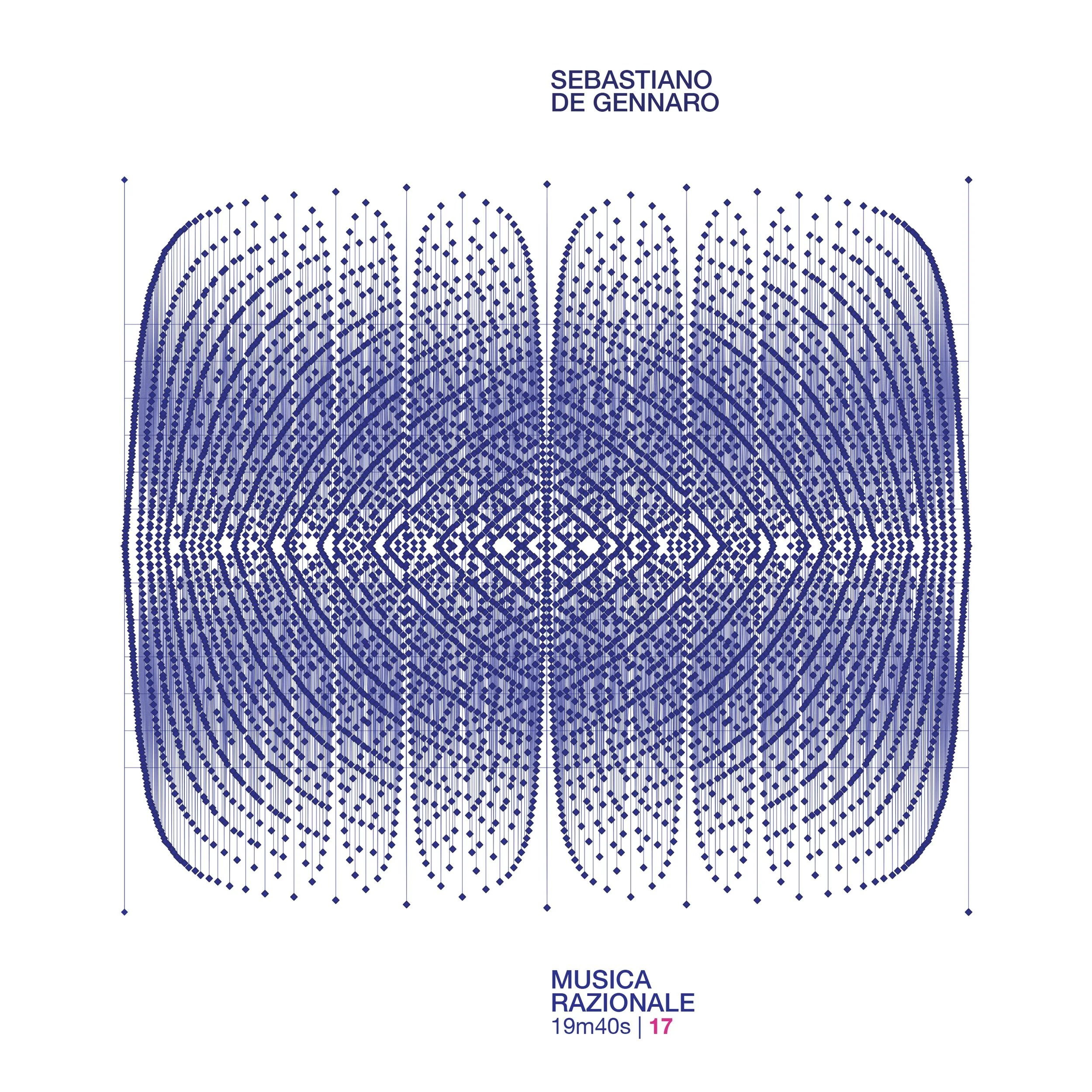
The seventeenth issue of our recording series is a collection of six original compositions by Sebastiano De Gennaro. For more information on the music content, please visit here. Price includes VAT. Delivery prices available at checkout.
Subscriber Discount: If you are buying one or more copies of this item together with a subscription, or if you have already subscribed, please get in touch with us to redeem a discount on your purchase.

For the first time, you can now aquire the original art created for our cover design. Created by Italian artist Annalisa “Nali” Limonta, who is also behind our beautiful “Plantasia” booklet and CD design, the artwork for our 18th release, “Call For Scores”, is now available in a unique piece for your personal collection.